VIP Formula 1 Hospitality: A Considered Guide to Comparing Experiences
How to compare VIP Formula 1 hospitality options on viewing, dining and atmosphere, and match them to the reason you are hosting.
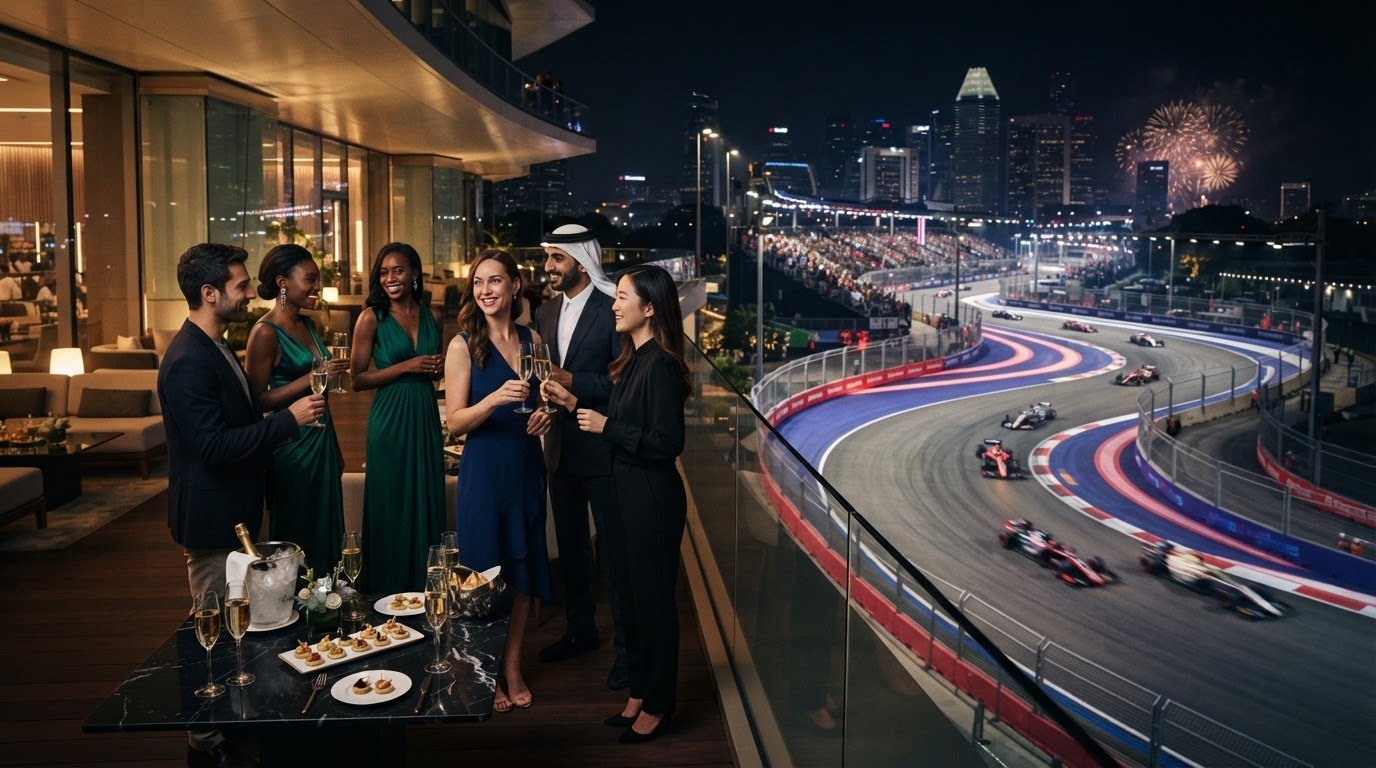
The most prestigious view of a Formula 1 race isn’t always the setting that will make the strongest impression on a client. In vip formula 1 hospitality, access is only one part of the occasion. The atmosphere, opportunities for conversation and the way the experience reflects your brand all shape its value.
Hospitality labels can make very different experiences appear comparable. To choose well, look beyond the label and compare the setting, viewing, dining and hosting style against what your guests need. An impressive view may draw attention, but a well-planned occasion also gives guests a comfortable way to connect.
This guide explains how to compare VIP Formula 1 hospitality, match the format to your guest profile and plan around your business objectives. With more than 15 years of experience and access to races worldwide, AIOKA brings together exclusive trackside settings, curated gourmet dining and bespoke brand activation. Use the criteria below to identify what matters most for your guests, then shape the experience around a clear purpose.
Key Takeaways
• Assess vip formula 1 hospitality by more than access: consider viewing, guest interaction, privacy and programme flexibility.
• Match the format to your guests, the relationship you want to strengthen and the tone your brand intends to convey.
• Use a practical selection sequence: define the hosting purpose and guest profile, compare experience details, then shape the programme.
• Consider how corporate hospitality and brand activation can make a race weekend a distinctive occasion for your guests.
VIP Formula 1 Hospitality: What the Experience Means for Corporate Hosts
VIP hospitality combines a premium race setting with a considered guest-hosting experience. For a corporate host, its value lies not in access alone, but in how the setting, service and programme welcome guests and support a clear purpose. A ticket provides race admission. A hospitality environment adds a place to gather, dine and follow the race. A corporate hosting programme gives those elements a deliberate shape around the people invited.
The distinction matters at a Formula 1 event, where the spectacle is already compelling. The championship’s international reach and distinctive race settings, outlined in this overview of Formula One (F1), make each weekend a particular context for entertaining. Hospitality can give guests a place to gather and share the occasion. Compare the specific setting, services and access included in the experience rather than assuming they are the same across formats. Standard race attendance remains a meaningful way to enjoy the sport; corporate hospitality puts greater emphasis on hosting as part of the event.
From premium race access to a hosted experience
A ticket is an entry credential. A hospitality environment is the setting where guests can gather around the race. A hosted corporate programme goes further: it considers how guests are welcomed, how the event unfolds and where time together can support conversation. When comparing experiences, look at viewing, dining, service and opportunities to interact as separate features. That makes it easier to understand what each one contributes to the occasion.
For example, a host welcoming a small group of senior clients may prioritise an intimate atmosphere and time for conversation alongside race viewing. A broader gathering may call for a more social rhythm, with guests sharing the event and moving between hospitality and the action on track. Dining also shapes the occasion. A shared meal can provide a natural pause, while carefully curated culinary details can help express the host’s standard of welcome.
The corporate purpose behind VIP race-weekend hosting
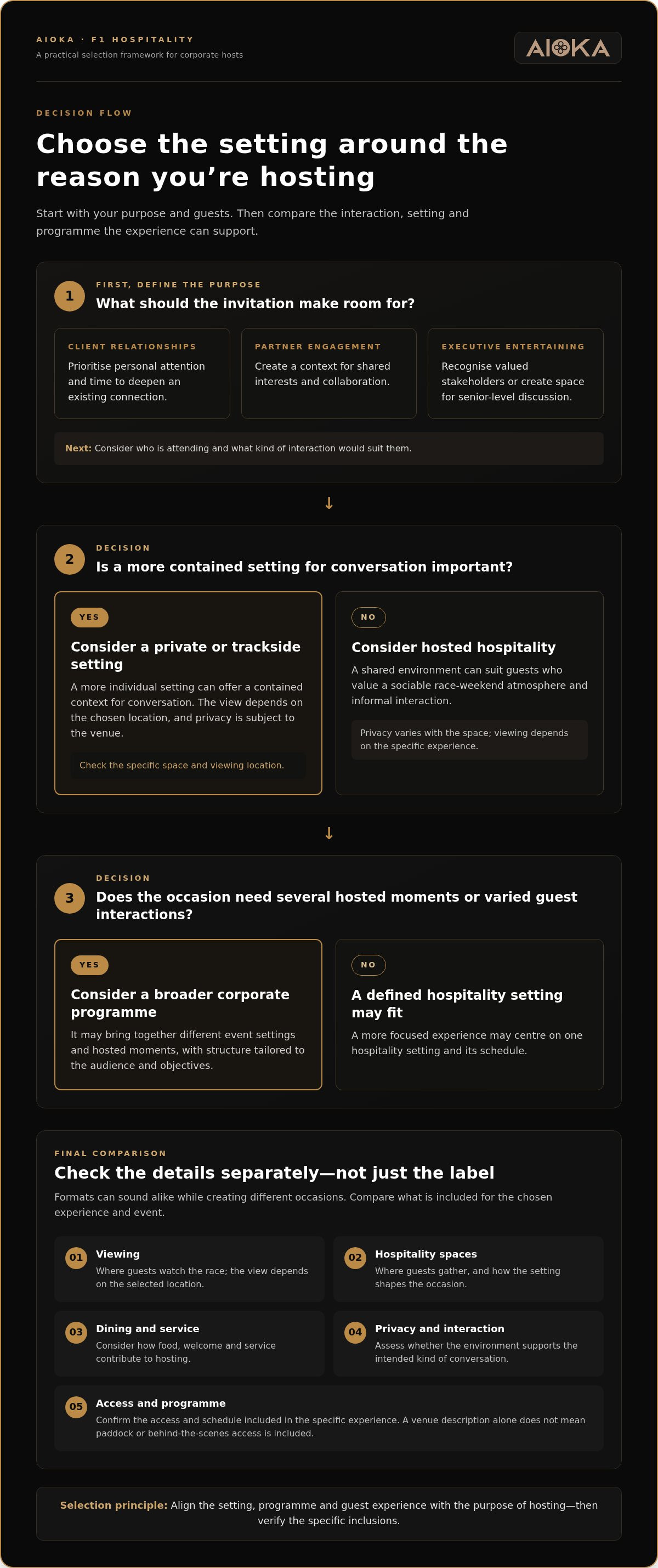
Before selecting a setting, define what the invitation is intended to do. Client relationship-building may call for personal attention and time to deepen an existing connection. Partner engagement may centre on shared interests and collaboration, while executive entertaining may recognise valued stakeholders or create space for senior-level discussion. These aims are distinct, even when the event is the same.
The right VIP Formula 1 hospitality experience depends on the guest profile, the purpose of hosting and the event setting. Use those factors to guide the choice: assess whether the environment suits the people attending, whether the programme allows the desired kind of interaction, and whether its tone reflects the relationship. A remarkable sporting occasion can provide a memorable backdrop, but commercial outcomes are objectives to plan and evaluate, not results hospitality can guarantee. A considered choice aligns the experience with those intentions while allowing guests to enjoy the race in their own way.
Comparing VIP Formula 1 Hospitality Formats by Setting and Access
Hospitality descriptions can sound alike while creating very different occasions. Setting, access, privacy and programme design shape how guests spend a race weekend, even when the labels seem similar. Compare what each environment makes possible for your guests. Pay particular attention to the viewing location, the hospitality spaces and the details of access included for the chosen experience and event.
The formats below are broad planning categories, not fixed package definitions. A shared hospitality environment may suit guests who value a lively atmosphere, while a more private setting can create a quieter context for conversation. A broader corporate programme can bring several hosted moments together, with its structure planned around the event and audience.
| Experience format | Setting and viewing | Guest interaction and privacy | Programme flexibility |
|---|---|---|---|
| Hosted hospitality | A shared environment for gathering, with viewing determined by the specific experience. | A sociable atmosphere can encourage informal interaction; privacy varies with the space. | May centre on a defined hospitality setting and schedule. |
| Private or trackside setting | A more individual setting, potentially close to the circuit; the view depends on the chosen location. | Can offer a more contained context for conversation, subject to the venue. | Can be shaped around the hosting purpose and event context. |
| Broader corporate programme | May bring together different event settings and hosted moments. | Can accommodate varied guest interactions across the programme. | Its structure can be tailored to the audience and objectives. |
Hosted hospitality, private settings and trackside viewing
Shared hospitality suits a collective race-weekend mood, where guests enjoy the spectacle in company. A private setting can put more emphasis on discretion and conversation. Trackside viewing brings the race close to the gathering, with on-track action and quieter intervals shaping the rhythm of the day. A venue description alone does not mean paddock or behind-the-scenes access is included. Treat those as separate details and state them clearly when they form part of the selected experience.
Comparing the experience beyond the view
Assess viewing, service, dining, privacy and conversation separately rather than treating one premium feature as a measure of the whole experience. Ask how the service rhythm fits around the race, whether dining supports the intended atmosphere and whether the setting makes conversation easy. For a closer perspective on the role of food in hosting, explore this curated culinary hospitality guide; this account of trackside corporate hosting at Formula 1 offers further context on race-day atmosphere.
For a distinctive occasion, align the setting, dining and hosting rhythm with the guest profile instead of choosing on viewing alone. AIOKA brings these considerations together through corporate hospitality planning, shaping experiences around the event and the purpose of bringing guests together.
Matching VIP F1 Hospitality to Guests, Relationships and Brand Objectives
Start with the people invited, not a format selected in isolation. Consider the relationship you hope to develop, the tone you want to establish and what guests should take away from the occasion. A long-standing client may value personal conversation and recognition, while a prospective partner may benefit from a welcoming programme with natural opportunities to connect.
Guest familiarity with Formula 1 matters, too. Enthusiasts may welcome time to follow the race closely and discuss its finer details. Guests new to the sport may appreciate an accessible introduction and thoughtful hosting that lets the event’s energy speak for itself. Neither profile calls for a single prescribed style. Aim to make the experience comfortable and engaging without assuming every guest shares the same interests or expectations.
Choosing for clients, partners and senior executives
Let the invitation scale and event rhythm reflect the relationship. Intimate executive hosting can support a discreet atmosphere and sustained exchanges, while a larger guest programme may create a broader social setting for clients, partners or colleagues. A wider invitation list isn’t inherently more effective, and a smaller gathering isn’t automatically more personal. Consider the group’s composition, how well guests know one another and the tone you want to create.
Plan the balance between hosted moments and open time. A welcome or shared meal can give the gathering a natural point of connection. Pauses between structured elements leave room for individual conversations, race viewing and personal preferences. In vip formula 1 hospitality, attentive pacing can make a programme feel considered rather than over-directed, particularly when guests have different levels of interest in the sport.
When brand activation belongs within hospitality
Guest entertaining and brand activation can complement one another, but they serve different purposes. Hospitality centres on welcoming and engaging invited guests. An activation introduces a deliberate brand experience, such as an interaction or designed moment that expresses a company’s identity. Include one when it adds meaning to the occasion, not simply because a branded element can be placed in the setting.
A restrained, well-integrated activation can give guests a tangible way to encounter a brand story while keeping the race at the centre of the event. The concept should suit the audience, setting and hosting objective. Each detail should contribute to the atmosphere rather than compete with it. For broader considerations in shaping an experience, this Formula 1 corporate hospitality buyer guide offers a complementary perspective on selection.
Set evaluation criteria before the event. Agree on intended outcomes, gather considered feedback from guests and review the quality of follow-up conversations or relationships afterward. These signals help assess whether the experience served its purpose without implying a guaranteed commercial return. AIOKA brings corporate hospitality and bespoke brand activation together across Formula 1 race weekends, creating programmes shaped around guests and objectives.
A Practical Framework for Selecting VIP Formula 1 Hospitality
A clear selection process keeps the decision anchored in the occasion you want to create, rather than in headline features alone. Apply the same sequence across races, then adapt the brief to the event and guest group.
Define the purpose.
Decide whether the occasion is intended to strengthen client relationships, recognise partners, host executives or bring a wider group together.
Profile the guests.
Consider seniority, relationship stage, group dynamics, familiarity with Formula 1 and preferences that will shape their experience.
Choose the event context.
Identify the race weekend and atmosphere that best suit the brief. Compare the setting and experience details for the event you select.
Compare experience dimensions.
Assess setting, guest flow, hospitality environment, viewing and opportunities for brand expression as separate criteria.
Shape the delivery.
Align the programme, hosting moments and desired tone. Keep essential requirements distinct from optional refinements.
Briefing the experience around a defined audience
Before comparing settings, record who is attending, how established the relationship is and whether the occasion should feel discreet, convivial or celebratory. Separate essential requirements, such as space for conversation, from preferences, such as a particular style of dining. The same race can support a private executive gathering focused on discussion or a wider client programme built around a shared experience. Let the brief determine its shape.
| Hosting priority | Experience criteria to consider |
|---|---|
| Private executive discussion | Privacy, a measured programme rhythm and opportunities for uninterrupted conversation |
| Client relationship-building | Welcoming service, shared dining moments and a setting that encourages natural interaction |
| Partner engagement | Guest flow, shared experience and appropriate opportunities to express the brand |
| Broader corporate gathering | Space and programme structure suited to the group, with viewing and hospitality considered together |
Comparing proposals with a consistent scorecard
Use the same criteria for each option: setting, guest flow, hospitality environment, viewing and brand expression. Separate specific inclusions from general descriptive language, and note which details relate to the selected experience and event. This makes comparisons more useful than relying on labels alone. For wider guidance on hosting intent, consult these Formula 1 client entertainment principles.
Once you have ranked the priorities, decide where the experience needs refinement and where a simpler approach will serve guests just as well. AIOKA brings corporate hospitality, trackside settings and curated dining together in programmes shaped around the brief. Explore a tailored corporate hospitality approach for your Formula 1 event.
AIOKA VIP Formula 1 Hospitality: From Global Access to Considered Hosting
AIOKA is an independent global hospitality and brand activation agency, shaping corporate experiences across Formula 1 race weekends. With more than 15 years of experience and access to races worldwide, the agency brings together trackside viewing suites, curated gourmet dining and private client entertaining in response to each corporate brief. Rather than simply assembling impressive elements, AIOKA gives them a coherent purpose for the guests and relationships at the heart of the occasion.
A race weekend can serve more than one ambition. A host may want to recognise established clients, welcome prospective partners or bring senior guests together around a shared sporting experience. The setting, culinary character and opportunities for interaction can each contribute to that intention. Consider them as parts of one programme rather than as isolated features.
A tailored experience for each corporate brief
Each programme begins with the audience and the reason for hosting. AIOKA shapes corporate hospitality around those priorities, bringing together a suitable trackside setting, a considered dining experience and private client entertaining in a way that reflects the desired tone. The balance can differ for an intimate gathering and a wider group, but the guiding principle remains the same: the programme should feel natural to its guests and purposeful to its host.
That means considering how the occasion will unfold, from the welcome and shared moments to time for individual conversation and engagement with the race. Culinary choices can reinforce the character of the gathering, while the setting provides its distinctive atmosphere. AIOKA’s access to races worldwide gives these decisions a global context, with each experience shaped around the selected event rather than a standard formula. The result is a considered framework for VIP Formula 1 hospitality, with each element serving the wider brief.
Bringing hospitality and brand presence together
Hospitality can stand on its own as a refined expression of welcome. When there is a clear brand objective, a bespoke activation can add another dimension. AIOKA’s brand activation services complement corporate hospitality with purposeful ways for guests to encounter a brand, while keeping the race and the quality of the gathering central. An activation should feel integrated with the occasion, not imposed upon it, giving the brand story a considered presence and guests a natural reason to engage.
Thoughtful planning connects the atmosphere of the setting, the dining experience and the moments of interaction with the relationships the host hopes to nurture. These elements can support meaningful partner engagement, but they do not promise a particular commercial result. Their value lies in creating a distinctive environment where hospitality and business objectives can sit comfortably together.
For an upcoming corporate occasion, bring your hosting objective into the conversation and shape the experience around your guests, setting and purpose. Discuss a considered Formula 1 hospitality experience with AIOKA.
Shape the Race Weekend Around What Comes Next
The most considered vip formula 1 hospitality starts with a clear intention for the relationships you want to nurture beyond race weekend. Before planning the event, define what guests should feel, what conversations the occasion should make possible and what impression you want them to carry back to their business. Those priorities give the experience a lasting point of view, rather than leaving its significance to the spectacle alone.
From there, a focused brief can guide the choices that follow and align the guest experience with your wider hosting objectives. AIOKA can shape that direction into a corporate occasion designed around your audience and ambitions.
Discuss a considered Formula 1 hospitality experience with AIOKA and take the first step towards a race weekend with purpose, distinction and room for meaningful connection.
Frequently Asked Questions
Does VIP Formula 1 hospitality include paddock access?
Not automatically. The term “VIP hospitality” alone doesn’t establish access to the paddock or other behind-the-scenes areas. A hosted setting may centre on dining and race viewing, while a particular experience may specify additional access. Distinguish the hospitality setting from any separate access privileges, and describe only the inclusions stated for the chosen experience and event. This helps set clear expectations for guests.
Can guests attend VIP Formula 1 hospitality if they are not motorsport enthusiasts?
Yes. Guests can enjoy the occasion through its setting, food, service and company, even if they don’t follow the championship. A host might share a short note about the race format or key participants beforehand, then let guests engage at their own pace. For a mixed group, plan space for both race-focused conversation and broader discussion, so enthusiasm for motorsport isn’t a prerequisite for feeling included.
How many days should a corporate group attend a Grand Prix?
There’s no universal duration. The right choice depends on the purpose, guest schedules and programme design. A focused client gathering may suit a shorter visit, while a multi-day occasion can allow relationships to develop across several shared moments. Start by considering how much time the group can reasonably give and what the event needs to accomplish. Then build an itinerary around that rhythm rather than choosing a duration by default.
What should guests wear to VIP Formula 1 hospitality?
Guests should follow the dress guidance for their specific event and setting. If no detailed guidance has been shared, smart, comfortable clothing is a considered choice for a full day that may involve indoor and outdoor spaces. Hosts can prevent uncertainty by including dress expectations with the invitation, along with practical notes about the day. Clear guidance helps guests feel prepared without prescribing one style for every race.
Can a company host clients at more than one Formula 1 Grand Prix?
Yes. A company can plan hospitality around multiple Grand Prix weekends when a broader programme suits its audience and relationship objectives. For instance, one occasion could recognise established clients and another engage a different group, while maintaining a consistent standard of welcome. Each race has its own event context, so shape the guest experience for that occasion rather than repeating an identical format. AIOKA can develop a programme around that wider brief.
Are race tickets always included with VIP Formula 1 hospitality?
Not necessarily. A VIP label doesn’t by itself clarify whether race admission, a particular viewing location or hosted services are part of the arrangement. Treat each as a distinct detail when reviewing an experience, then communicate the relevant information clearly to guests before they travel. For corporate invitations, clarity about what the occasion covers helps guests understand the plan and arrive with appropriate expectations.
Watch the story unfold from the paddock
Since 2012, AIOKA has hosted guests for brands like Microsoft, Marriott and Red Bull at Formula 1 race weekends. Let us plan yours.
Enquire about F1 hospitality