Trackside Corporate Hosting at Formula 1: Gastronomy, Cellars and the Race-Day Experience
Trackside Corporate Hosting at Formula 1: Gastronomy, Cellars and the Race-Day Experience
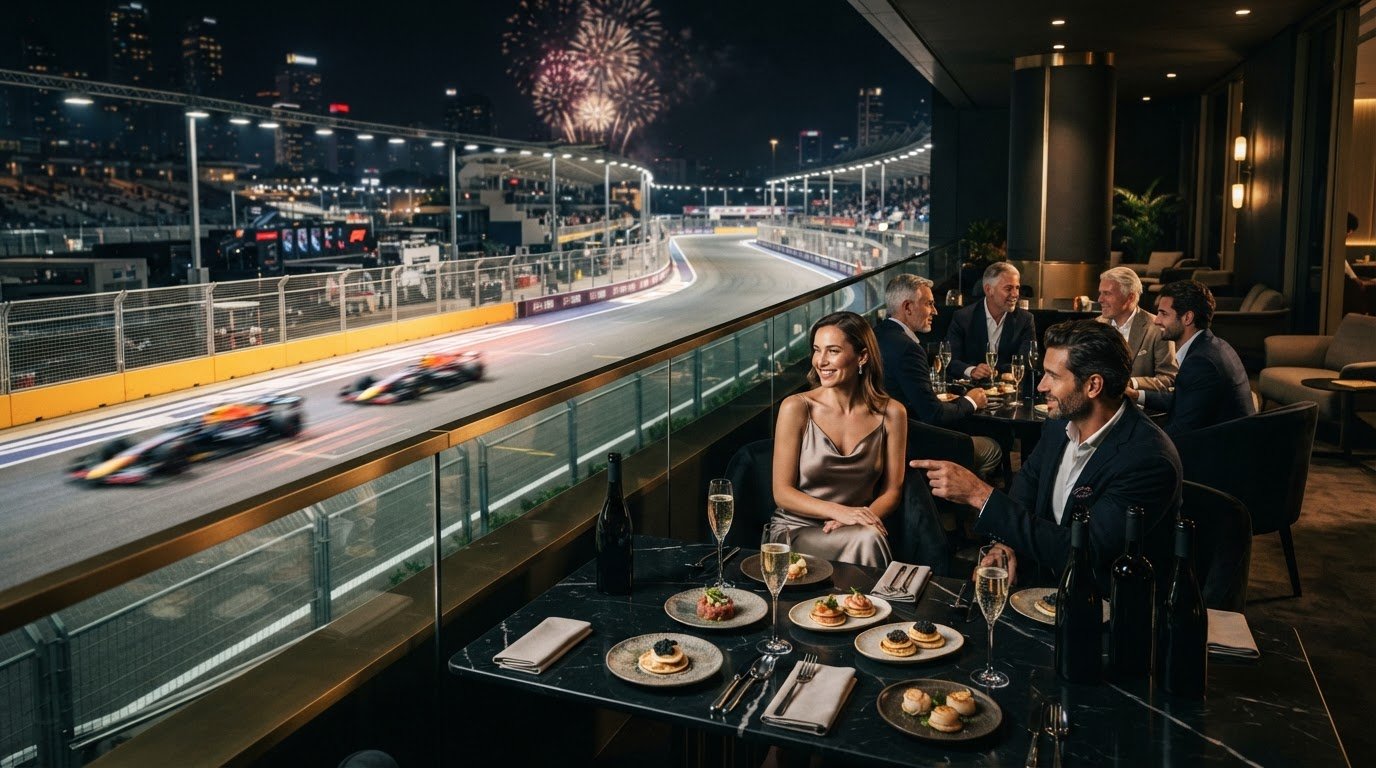
The finest meal at a Grand Prix is not necessarily the most elaborate. It is the one that suits the circuit, the schedule and the people at the table. In trackside corporate hosting formula 1, thoughtful food and wine can make guests feel welcome without competing with the day’s pace. The challenge is to create an exceptional dining experience while allowing time for race viewing, conversation and the transitions between them.
A considered plan brings these elements together. Start with the host’s purpose and guest preferences, then choose a dining format, menu and service rhythm that suit the venue and programme. A client gathering, partner welcome and team occasion may each call for a different atmosphere. This article explains how to make those choices, avoid common planning mistakes and give guests room to enjoy both the hospitality and the spectacle beyond the table.
Key Takeaways
• Shape the culinary experience around the venue, the occasion and guest preferences, rather than treating the meal as a separate event.
• Choose food and cellar selections that complement one another while keeping the focus on welcome, comfort and conversation.
• Match a seated meal, flexible reception or lighter refreshment format to your hosting purpose and the Grand Prix schedule.
• Use a five-step planning framework to align business objectives, guest needs, dining format, menu and race-day timing.
• Effective trackside corporate hosting formula 1 brings gastronomy, service and setting together to support meaningful client relationships.
The place of gastronomy in trackside corporate hosting at Formula 1
Trackside corporate hosting is more than a view of the circuit. The setting, service and guest experience should work together to create a purposeful welcome, guided by what the host wants the occasion to achieve. In trackside corporate hosting formula 1, gastronomy is not simply a premium inclusion. It helps set the pace and character of the gathering.
Trackside culinary hospitality uses food, service and setting to welcome guests and make room for conversation within the rhythm of a race weekend. A meal can be excellent in isolation and still feel out of place if it interrupts an important session or leaves guests little time to settle in. A well-planned dining moment fits naturally into the occasion.
Formula 1 offers a vivid backdrop: the sound and movement of the cars, the anticipation between sessions and the energy of a busy circuit. Hospitality can balance that intensity with a place to pause. Thoughtful food and wine add to the experience without competing with the event, while attentive service helps guests feel at ease, especially if the setting is unfamiliar.
From race viewing to considered corporate hospitality
A shared dining moment can give guests a natural point of arrival. It offers time to get acquainted with the surroundings and begin talking before attention turns back to the track. The host’s purpose should guide the atmosphere: a client gathering, partner welcome or team occasion may call for a different approach, even at the same circuit.
Consider the entire guest journey rather than a checklist of inclusions. Where dining sits in the day, how guests move between conversation and viewing, and how service is delivered all affect whether the experience feels composed. The Formula One Paddock Club is one established example of hospitality integrated into the circuit environment, where dining and trackside views are part of a broader guest experience.
What a culinary experience can contribute
Food, service and setting each play a different role. A welcoming table gives guests a shared focus. Well-judged service supports comfort without interrupting conversation, and a considered environment helps the occasion feel intentional. Together, these details can make informal exchanges easier, although neither a meal nor a Grand Prix invitation guarantees a business outcome.
The practical test is whether guests can enjoy the event and engage at their own pace. For example, welcome guests with a relaxed dining moment before a session, then let the gathering shift naturally towards race viewing. When the timing works, gastronomy becomes part of the hospitality’s purpose: a gracious way to bring people together in the distinctive atmosphere of Formula 1.
Curating food and cellar choices for a Formula 1 setting
Design a Grand Prix menu for the conditions in which guests will enjoy it: the time available, the venue and the group’s preferences. The best choices are not necessarily the most elaborate. They should feel generous, be comfortable to eat and fit around the event’s changing pace.
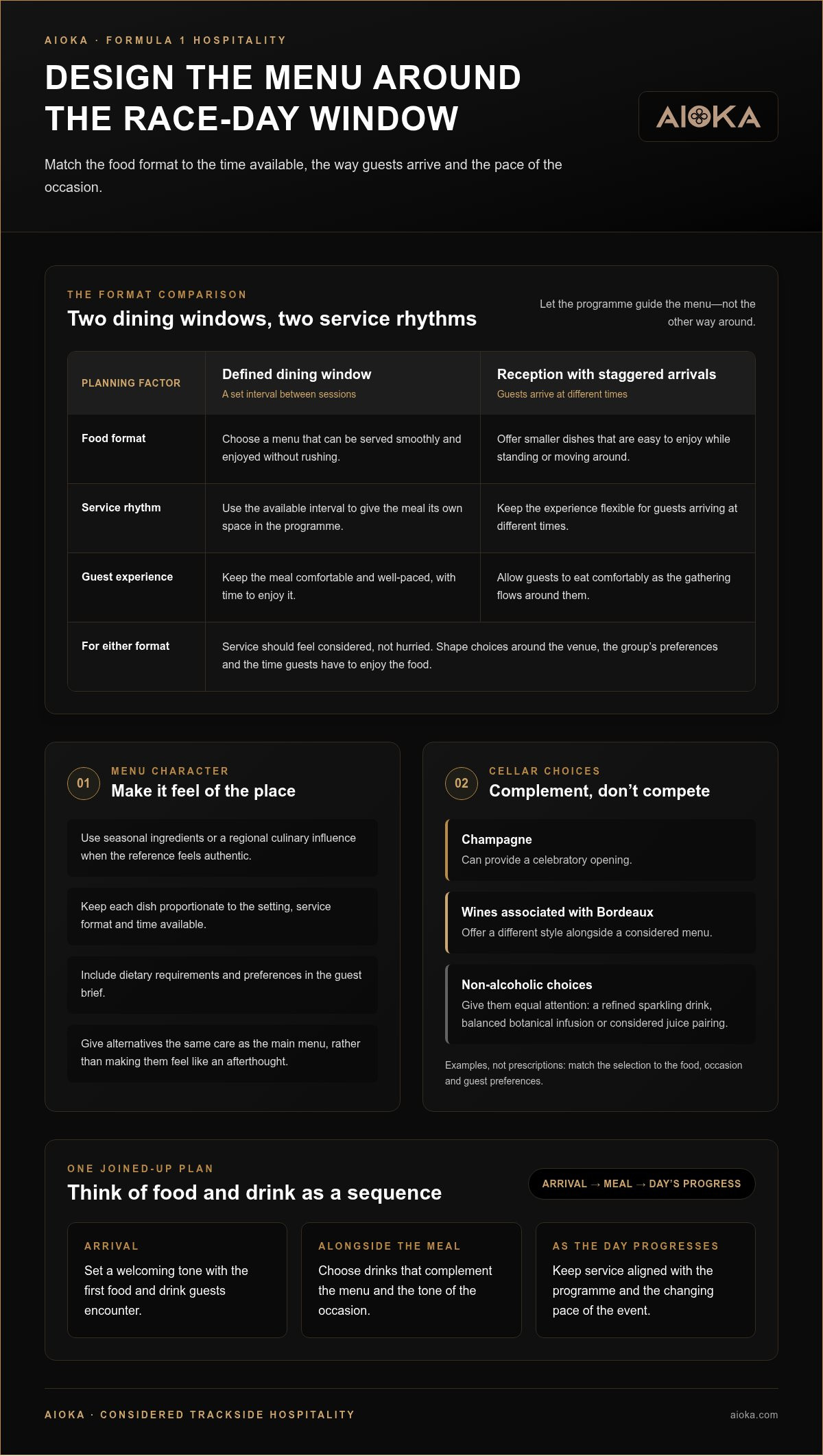
Start by mapping the dining window. If guests have a defined interval between sessions, choose a menu that can be served smoothly and enjoyed without rushing. For a reception where guests arrive at different times, smaller dishes that are easy to enjoy while standing or moving around can offer more flexibility. In either case, service should feel considered, not hurried.
Building a menu around the occasion
Destination and season can give a menu a sense of place when the reference feels authentic. Consider seasonal ingredients or a regional culinary influence rather than relying on a themed presentation. Include dietary requirements and preferences in the guest brief, and give alternatives the same care as the main menu. This avoids a common misstep: offering an alternative that feels like an afterthought.
For broader principles on tailoring food to the character of a Grand Prix gathering, explore curated culinary hospitality at the Grand Prix. The guiding principle is proportion: each dish should suit the setting, service format and time guests have to enjoy it.
Treating the cellar as part of the welcome
A well-judged cellar selection adds dimension to a meal without turning the gathering into a tasting. Champagne, for example, can provide a celebratory opening, while wines associated with Bordeaux offer a different style alongside a considered menu. These are examples, not prescriptions. The right choice depends on the food, the tone of the occasion and guest preferences.
Give non-alcoholic drinks equal attention. A refined sparkling drink, a balanced botanical infusion or a considered juice pairing can make the experience feel complete for guests who do not drink alcohol. Offer choices discreetly, without making assumptions or asking guests to explain their preferences.
For trackside corporate hosting formula 1, plan the menu and cellar as one sequence: what guests encounter on arrival, what accompanies the meal and what is available as the day progresses. This keeps the selection focused and service aligned with the programme. AIOKA’s curated culinary experiences are part of its premium Formula 1 corporate hospitality, with gourmet dining shaped around the occasion and its guests.
Balancing dining, conversation and the changing race-weekend rhythm
A Grand Prix schedule rarely suits one uninterrupted dining period. Practice, qualifying and race-day moments create different patterns of attention, so the hosting format should respond to the event rather than ask guests to ignore it. A clear run-of-show gives dining and conversation their own space while leaving room for the spectacle, without over-programming the day.
The right format depends on the guest list and the host’s purpose. A seated meal can give a focused gathering structure. A reception encourages guests to move between conversations, while lighter refreshments suit a day when viewing remains central. Each can feel considered when service, timing and tone align.
Choosing a dining format for the guest list
For a smaller group seeking sustained conversation, seated dining creates a shared focus and a natural flow between courses. A flexible reception is less formal and can make introductions easier. Refreshments offer a lighter touch when there is limited time to pause. Choose by considering how well guests know one another, why they are coming together and how much of the day they want to spend watching the circuit.
| Format | Best-fit moment | Hosting consideration |
|---|---|---|
| Seated meal | A planned gathering with time for conversation | Allow a settled dining interval and avoid crowding it with competing moments. |
| Flexible reception | Guest arrivals or an informal networking window | Make movement and service feel effortless, with space for conversation to develop. |
| Light refreshments | A brief pause around viewing or a session transition | Keep service easy to enjoy without drawing attention from the event. |
Creating a race-day service rhythm
Plan around the key moments guests will want to follow, then place dining and conversation in intervals that suit the venue and programme. Instead of imposing a rigid meal time, build a flexible sequence with clear transitions and room to adjust. For trackside corporate hosting formula 1, this cadence helps the experience feel cohesive as attention shifts between the table and the track.
A sample sequence might be:
Arrival
Welcome guests and give them time to settle, orient themselves and greet one another.
Before a key session
Serve a meal or refreshments at a pace that leaves guests ready to watch the action.
During a natural interval
Leave room for informal conversation instead of scheduling another formal activity.
After the session
Give guests time to gather, reflect or continue conversations before the next transition.
Use this as a framework, not a fixed timetable. The Grand Prix programme, venue and guest preferences should determine the precise sequence. Leave breathing room between hosted moments. An open interval can be more valuable than another scheduled feature, giving guests a choice between conversation, dining and the race-day atmosphere.
A practical framework for planning trackside food and wine
A refined hospitality plan starts with the purpose of the gathering, not a default idea of what luxury should look like. A client welcome, partner event and internal reward may each need a different level of formality, dining format and service rhythm. For trackside corporate hosting formula 1, the food and beverage plan should express that purpose while accommodating the circuit and the people invited.
Clarify the purpose, understand the guests, choose the format, plan the menu and coordinate the timing. This sequence gives culinary decisions a clear foundation and connects practical details to the wider occasion.
Preparing the host brief
Before choosing dishes or wine, record why the gathering is taking place, who will attend and what atmosphere the host wants to create. A concise guest brief should capture dietary requirements, non-alcoholic preferences and service expectations, as well as anything that affects how guests will take part. Separate essential moments from optional enhancements to keep the plan focused.
Clarify the purpose.
Define the gathering’s business objective and the feeling guests should take away, without assuming the event itself will deliver a particular commercial result.
Understand the guests.
Consider their preferences, dietary needs, familiarity with one another and likely interest in dining, conversation and race viewing. Treat non-alcoholic choices as a normal part of beverage planning.
Choose the format.
Decide whether a seated meal, reception or lighter refreshment style suits the guest group and desired tone. Let the purpose guide the choice rather than defaulting to a generic luxury template.
Plan the menu.
Select food and beverages that suit the setting, service style and time available. Include appropriate alternatives so guests can dine comfortably without drawing attention to individual requirements.
Coordinate the timing.
Map the service sequence against the Grand Prix programme and venue context, leaving room for natural pauses and adjustments.
Coordinating menu, service and timing
Once the brief is clear, assess each choice as part of one experience. Does the food suit the formality? Can guests enjoy it in the time available? Does the service leave room for interaction? A flexible run-of-show can identify welcome, dining and viewing moments while preserving space between them. It should guide coordination, not impose an identical timetable on every race.
For instance, a hosted meal may fit before a key session if the programme allows, while a reception can accommodate less synchronized arrivals. If timing shifts, an adaptable service plan helps avoid rushing guests or leaving the welcome incomplete.
AIOKA brings culinary curation into the wider design of Formula 1 corporate hospitality, aligning the host brief with the setting and guest experience. Plan your Formula 1 corporate hospitality around the purpose of your occasion.
AIOKA's considered approach to Formula 1 corporate hosting
With the culinary principles and planning framework in place, the next step is bringing each element together into a complete hosting experience. AIOKA is an independent luxury event hospitality and brand activation agency providing premium Formula 1 corporate hospitality at race weekends worldwide. Its packages bring together trackside viewing suites, curated gourmet dining and private client entertaining facilities, shaped around the host’s purpose and invited guests.
Bringing culinary detail into the wider occasion
Food works best when it belongs to the whole experience. The menu should suit the setting and service format; the cellar should complement the meal and guests’ preferences; and the schedule should leave room for conversation and the race. AIOKA’s approach to trackside corporate hosting formula 1 brings these considerations into one bespoke plan, rather than treating dining as a separate inclusion or relying on a generic template.
Planning starts with the atmosphere the host wants to create. A gathering designed to welcome clients may feel different from one for partners or colleagues. Guest preferences, dietary needs, non-alcoholic choices and the balance of dining and viewing all inform the experience. Service and timing then help the day unfold with composure. The aim is a thoughtful, cohesive occasion, not a promise of particular business outcomes.
For a broader view of how hospitality packages relate to business objectives and event considerations, consult the Formula 1 corporate hospitality strategic buyer guide. It offers package-level context alongside the culinary decisions explored here.
Continuing from inspiration to planning
A considered plan starts with two foundations: the purpose of the gathering and the experience the host wants guests to have. The guest brief can then guide the format, menu and cellar, while an adaptable run-of-show connects hospitality with the rhythm of the Grand Prix. This sequence provides direction without prescribing the same arrangement for every race, venue or group.
Broader hosting principles can also help define how client entertainment should feel, from the first welcome to the final shared moment. AIOKA’s Formula 1 client entertainment guide explores that wider perspective and complements the practical planning steps in this article.
For organisations planning a distinctive race-weekend gathering, AIOKA brings setting, culinary curation and guest experience together in its corporate hospitality packages. Explore AIOKA’s Formula 1 corporate hospitality for an approach shaped around your occasion.
Shape the Experience Around Your Guests
Turn your intention into a clear hosting brief. Define what the gathering should make possible for guests, what atmosphere feels appropriate and which moments deserve the most attention. These decisions give the event a point of view and help each element feel purposeful rather than assembled from a standard template.
For trackside corporate hosting formula 1, begin with three considerations: why you are bringing guests together, what you want them to remember and which practical details will help them feel at ease. Then consider the setting, hospitality format and culinary direction as parts of one coherent occasion, tailored to your priorities.
AIOKA provides corporate hospitality and curated culinary experiences at Formula 1 race weekends worldwide. Explore AIOKA’s Formula 1 corporate hospitality and shape a considered experience for your next gathering. With a clear purpose and thoughtful planning, a race weekend can become a distinctive setting for welcoming guests well.
Frequently Asked Questions
Can Formula 1 corporate hospitality accommodate dietary requirements?
Yes. Include dietary requirements in the hospitality brief so the menu can account for them. Distinguish allergies, intolerances and preferences, and consider how alternatives will be presented and served. Discreet communication and clear menu information help guests choose comfortably without being singled out.
What non-alcoholic drinks can complement a trackside corporate menu?
Give non-alcoholic pairings the same attention as wine. Fine teas, a well-made alcohol-free aperitif or mineral water with a thoughtful garnish can suit different courses and moments in the day. Choose drinks that fit the food and occasion rather than treating them as an afterthought. A considered selection lets guests choose without explaining why they prefer not to drink.
Is vintage wine essential for Formula 1 corporate hosting?
No. A vintage wine is not essential to refined hosting, and age alone does not ensure that a bottle suits the menu or occasion. A thoughtfully chosen wine can be more appropriate than a prestigious older bottle selected for impression alone. Consider the food, the formality of the gathering and guests’ preferences, then let the cellar support the experience rather than become its main feature.
How can hosts make dining work around a Formula 1 race schedule?
Use the event timetable as your planning reference and place dining where guests can enjoy it without missing the moments they most want to follow. A meal before a scheduled session may suit a settled gathering; a reception or refreshments can work in shorter intervals. Build flexibility into service and allow time for transitions. For trackside corporate hosting formula 1, shape the plan around the specific Grand Prix programme and venue.
What should a corporate host include in a trackside culinary brief?
Include the gathering’s purpose, guest profile, desired atmosphere and preferred dining format, along with dietary requirements and beverage preferences. Note service expectations, such as a formal meal or informal reception, and identify the race-day moments guests want to prioritize. Separating essential elements from optional enhancements helps focus decisions. A clear brief gives the culinary team useful context before menu choices are made.
Can a Formula 1 hospitality experience include both dining and networking?
Yes. Dining and networking can work naturally together when the format gives guests shared moments as well as room to move between conversations. For example, a hosted meal can establish a common setting, followed by an informal interval for introductions and discussion. The host can help by making brief, relevant introductions while leaving guests free to engage at their own pace. Hospitality can create opportunities, but it cannot guarantee business outcomes.
Watch the story unfold from the paddock
Since 2012, AIOKA has hosted guests for brands like Microsoft, Marriott and Red Bull at Formula 1 race weekends. Let us plan yours.
Enquire about F1 hospitality