
Tech Industry Client Entertainment Ideas for VIP Events
Interactive digital experiences and branded mirror photo booths that turn VIP guests at tech events into participants, with guidance on budgets.
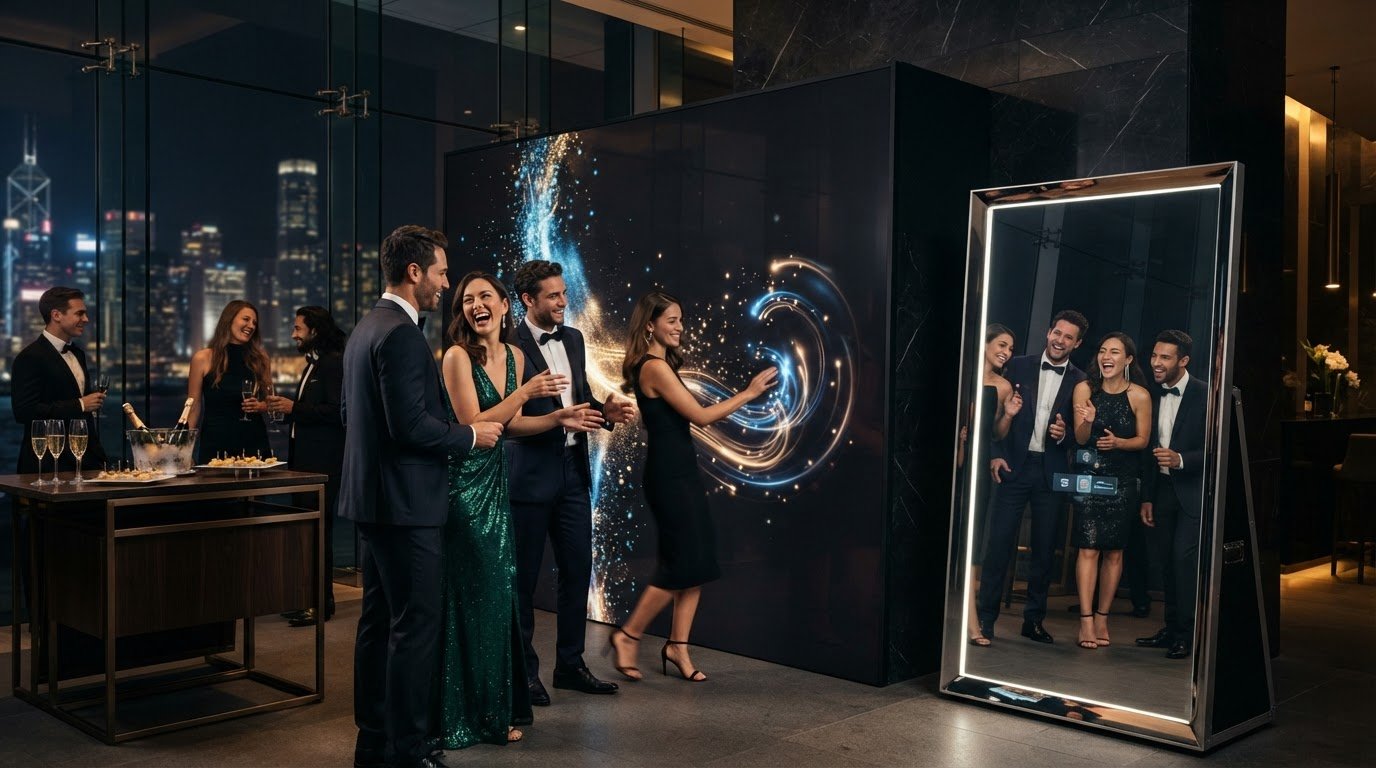
The strongest tech industry client entertainment ideas make VIP guests participants, not spectators. Interactive digital experiences and branded mirror photo booths give guests a way to engage, create a personal moment, and carry the event’s identity beyond the occasion. The most effective ideas feel considered, complementing the setting and the conversations taking place.
Technology leaders know novelty alone does not make an experience memorable. Relevance, ease of participation, and thoughtful design matter just as much. This guide explores interactive digital entertainment, branded mirror photo booths, and ways to align each idea with the purpose and atmosphere of a VIP gathering.
From immersive formats to polished photo experiences, these ideas offer a framework for creating a distinctive event while leaving room for genuine connection.
Key Takeaways
• Choose interactive digital experiences that invite participation and conversation, rather than relying on novelty alone.
• Make a branded mirror photo booth feel like a considered part of the event, with visuals that reflect the occasion and give guests a polished keepsake.
• Shape per-person entertainment budgets around the format, venue, guest experience, and level of customization, then prioritize what best serves the event’s purpose.
• For a more elevated client gathering, consider how corporate hospitality, brand activation, and curated culinary experiences can complement the entertainment.
Interactive digital entertainment experiences
Digitalization has reshaped entertainment over the past few decades, while streaming has expanded rapidly over the past few years as internet infrastructure improved. For VIP events, that shift makes interactive formats a natural fit: guests can explore, contribute, and share rather than simply watch. Gaming was projected to account for almost 11% of overall media and entertainment spending by 2026, underscoring its place in the changing entertainment landscape.
AI and digital twins can turn a product demonstration into a personalized experience. Guests might explore a digital twin of a data center, test choices in a simulated environment, or use an AI guide to tailor a product journey. Keep the interaction focused: set one objective, offer clear choices, and provide a human host who can continue the conversation beyond the screen.
Choose an experience by matching the guest’s interests with the relationship stage. For a new prospect, use a short, low-pressure demonstration; for an established partner, invite collaboration around a shared challenge. Nearly half of people aged 13 to 34 would rather socialize with peers in a video-game setting than in person, making a collaborative game one relevant option for younger guests.
For U.S. business entertainment expenses, distinguish the event’s business purpose from its entertainment elements, then classify and document each expense according to applicable tax rules. Record attendees, purpose, date, and business discussion so the tax treatment can be assessed accurately.
For government or public-sector technology guests, assess gifts, hospitality, procurement contact, and disclosure against the recipient’s policies and applicable public-sector rules. A modest, transparent format tied to a legitimate business discussion can help reduce avoidable compliance concerns.
Plan inclusively by offering different ways to participate: provide seated and standing access, clear instructions, captions for streamed content, and a non-gaming option. Review dietary needs and sensory considerations before the event. Afterward, assess engagement through participation and conversation quality, not attendance alone. A curated culinary experience can give guests a shared point of connection without requiring everyone to join the same digital activity.
Interactive mirror photo booth with branded photos
A mirror photo booth gives guests a direct role in the event’s visual story. Its reflective screen can show a welcome message, pose prompts, or a campaign frame before guests take a portrait. At a technology launch, the design might echo a new product’s interface, creating an immersive moment without competing with the main program.
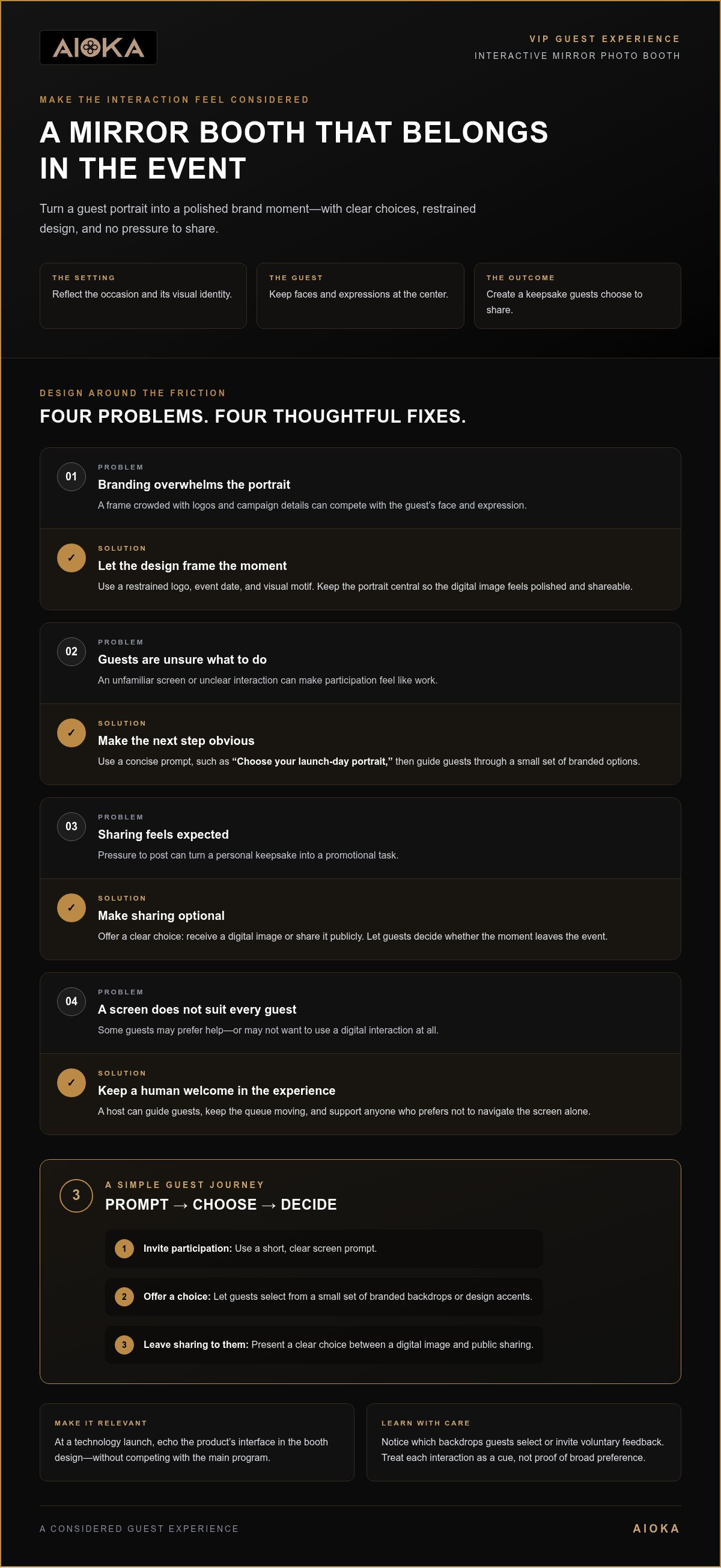
Branding works best when it frames the photograph rather than overwhelms it. Use a restrained logo, event date, and visual motif, keeping faces and expressions central. A polished digital frame makes the image suitable for social media, while discreet branding offers a natural reminder of the occasion.
Shape the interaction around three deliberate choices:
Invite participation
Use a concise screen prompt, such as “Choose your launch-day portrait,” so guests know what to do.
Offer a choice
Let attendees select from a small set of branded backdrops or design accents.
Make sharing optional
Present a clear choice between receiving a digital image and sharing it publicly.
These details matter to consumers accustomed to personalized digital experiences, including gaming and virtual environments. Make the booth feel innovative through its execution, not needless complexity. A host can guide guests, keep the queue moving, and help anyone who prefers not to use a screen.
Use participation thoughtfully to gather insights. An event team might observe which backdrop guests select or invite voluntary feedback after a portrait. Treat each interaction as a cue for action, not proof of broad preference. Meaningful visibility comes from a coherent experience guests choose to share, not pressure to post.
As event formats keep evolving, the mirror booth can connect a physical gathering with its digital identity. A carefully art-directed setup can support brand activation services by translating campaign visuals into a guest-facing moment.
How much do corporate client entertainment activities typically cost per person?
There is no single useful per-person figure for corporate entertainment: a hosted dinner, digital activation, and VIP event have different cost structures. A dinner budget reflects the menu, venue, service, and guest count; an interactive installation adds design, equipment, staffing, and setup. Define the experience first, then compare the full event spend with expected attendance.
For a clear estimate, separate fixed expenses from costs that rise with each guest. Venue hire, creative development, and installation may remain broadly stable as attendance changes, while catering and guest materials typically scale with headcount. A branded photo experience, for example, may require creative production and equipment, while each additional guest affects printing or other per-person costs.
Format
A seated dinner, live demonstration, and digital activation require distinct resources.
Location
Venue access, transport, and installation requirements shape the event plan.
Guest count
Catering and individual keepsakes usually scale with attendance.
Customization
Bespoke visuals, menus, and programming add production considerations.
Build a working budget by listing each cost category, assigning an owner, and dividing the projected total by expected attendance. Then compare like with like. A catered reception and a technology showcase should not be judged by headline per-person figures alone. Consider duration, service level, and opportunities for meaningful client conversation.
For bespoke hospitality, pricing is determined after a quote request and depends on factors such as location, guest count, duration, culinary choices, and event design. This helps align the investment with the event’s purpose, whether the priority is an intimate discussion, product introduction, or hosted experience across a major event weekend.
What are low-cost client entertainment ideas for tech startups?
A startup can create a thoughtful client experience without elaborate production. A founder-led product walkthrough, for example, can pair a concise demonstration with time for candid discussion. Focus on one subject, such as how a feature addresses a client’s workflow, then invite guests to share their perspective. The value comes from relevant access and conversation, not a crowded agenda.
Consider formats that draw on existing expertise, space, or digital tools. A small roundtable can bring clients together around a shared industry challenge, while an office visit can show how the team develops its product. A moderated discussion with a technical lead offers direct insight without a large-scale presentation. Keep the invitation focused and explain the purpose of attending.
Host a peer exchange
Invite a few clients to discuss one practical topic, such as data management or responsible AI.
Arrange a product clinic
Let attendees bring a real workflow question for a guided conversation with the product team.
Offer a virtual studio tour
Stream a brief behind-the-scenes look at a prototype or design process, followed by moderated questions.
Curate a local tasting
Pair a simple culinary experience with informal conversation, accommodating varied dietary needs.
To manage spending, start with the relationship objective and choose the simplest format that serves it. A client onboarding conversation may call for a focused product clinic; a renewal discussion may benefit from a quiet roundtable. Limit custom materials, use existing presentation tools, and keep the guest list intentional. This directs resources toward preparation and personal attention.
Before inviting guests, define the agenda, host roles, accessibility needs, and follow-up. After a product clinic, for instance, send each attendee a concise recap addressing their stated workflow question. If a startup wants to create a more distinctive hosted gathering, it can explore tailored event experiences.
AIOKA: Corporate Hospitality Packages
AIOKA brings corporate guests together through premium hospitality at Formula 1 race weekends, where trackside settings create a distinctive context for client engagement. Its Corporate Hospitality Packages suit companies seeking a hosted experience around a major event, while Brand Activation Services can give the gathering a considered connection to the company’s identity. Curated Culinary Experiences complement the occasion with an intentional hospitality element.
Consider this approach when a simple digital activation or startup gathering isn’t suited to the relationship, and you want to host clients in an elevated setting. AIOKA’s work centers on Formula 1 weekends, offering a way to shape hospitality around the event, the guests, and the brand experience.
To discuss a corporate hospitality experience for your guests, contact AIOKA.
Shape the Next Client Conversation
An event’s lasting value often emerges afterward, when a memorable encounter leads to a more meaningful business conversation. Decide what guests should take away: a clearer understanding of your work, a stronger connection with your team, or a reason to explore a shared opportunity. That intention can guide the invitation, the experience, and the follow-up.
Thoughtful tech industry client entertainment ideas begin with the next conversation in mind. For a gathering shaped around premium hospitality, AIOKA offers Corporate Hospitality Packages, Brand Activation Services, and Curated Culinary Experiences, bringing distinct dimensions of the occasion together in one considered setting.
When you’re ready to shape an event around your guests and business objectives, contact AIOKA to plan your event. A well-composed experience can give important relationships room to develop with purpose and ease.
Frequently Asked Questions
What client entertainment activities are popular with tech companies?
Popular tech industry client entertainment ideas include expert-led technology salons, collaborative problem-solving sessions, and cultural outings with a discussion component. A software company, for example, could invite clients to a private gallery viewing, followed by a conversation about design and user experience. This creates common ground beyond product features and gives attendees room to connect informally.
What are unique client entertainment ideas for technology industry clients?
Distinctive tech industry client entertainment ideas draw on a company’s expertise without becoming a conventional presentation. Invite guests to help curate a hypothetical digital product for a specific audience, then compare their choices with a design lead. The exercise encourages an exchange of perspectives and can surface questions for deeper conversation after the event.
What are premium client entertainment ideas for enterprise technology clients?
For enterprise guests, consider an invitation-only cultural evening, private performance, or chef-led dinner with a guest speaker. A carefully chosen setting shows consideration without making the event feel like a sales meeting. Add a concise introduction from a senior leader, then leave ample time for conversation among attendees with complementary interests or responsibilities.
What are alternatives to in-person client entertainment, such as virtual events?
Virtual alternatives include a live expert interview, facilitated peer exchange, or guided digital exhibit. Invite a specialist to discuss a timely industry challenge, for instance, and let attendees submit questions before and during the session. Follow up with a brief resource tailored to the discussion, giving participants a useful point of reference after the event.


