
Plan F1 corporate guest access, packages and support
How to coordinate guest lists, credentials, package inclusions and safety planning so an F1 corporate programme runs smoothly across race weekend.
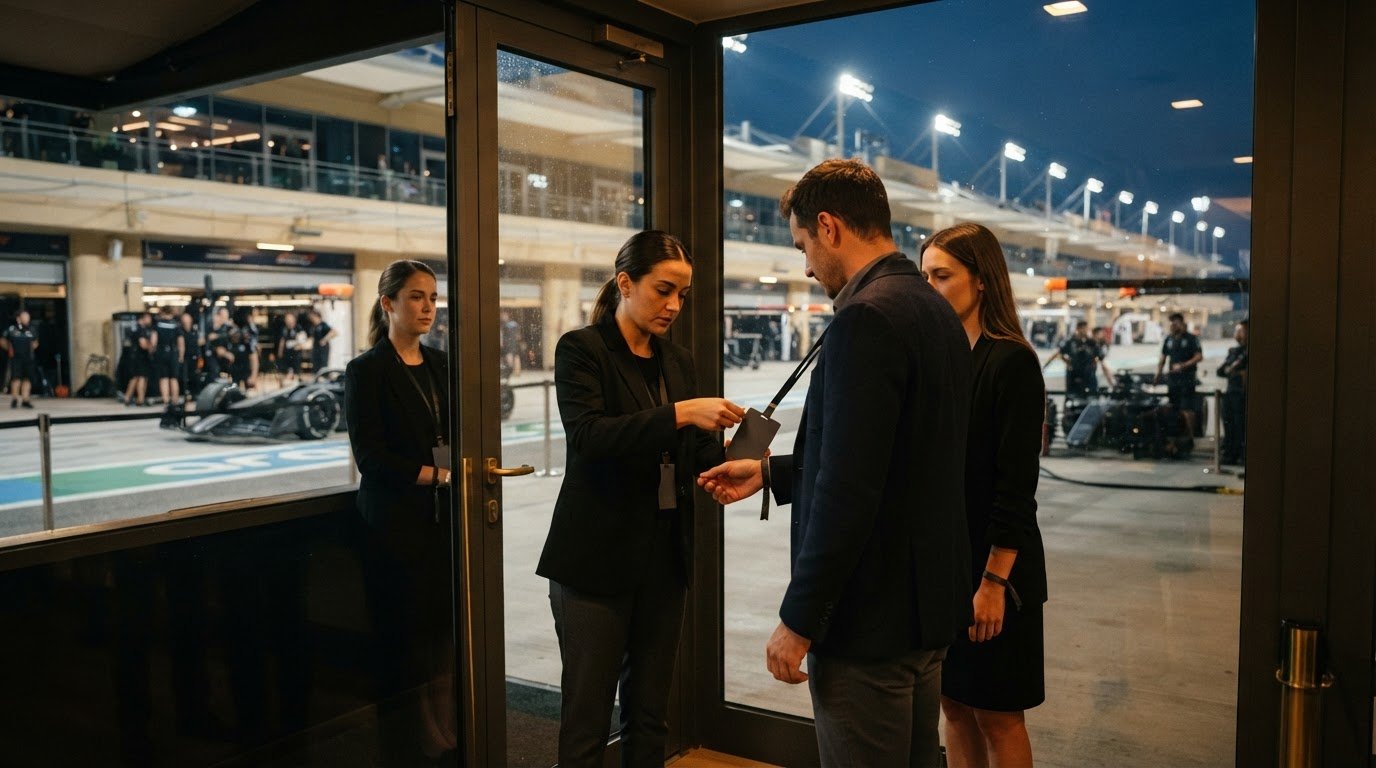
A successful F1 guest programme is shaped by the details behind the hospitality. The strongest F1 corporate guest management best practices start with a clear guest list, correctly coordinated credentials, defined package inclusions and a practical safety plan. If a credential issue arises, assess it, communicate clearly, take action, escalate when needed and follow up.
Access and atmosphere may set the scene, but guests remember whether each part of the experience felt considered and easy to navigate. This guide explains how to coordinate invitations, credentials, package services, safety arrangements and on-site support, while aligning each element with the purpose of your corporate gathering. You’ll also find a clear way to assess what a hospitality package needs to include, from guest requirements and catering to the support that helps the programme run smoothly across a race weekend.
Key Takeaways
• Organize guest lists and credentials around clear responsibilities, with a calm process for resolving access issues and communicating changes.
• Define package inclusions against the programme’s purpose, guest expectations and race-weekend schedule so hospitality feels cohesive rather than piecemeal.
• Build safety arrangements around venue procedures, emergency communication and practical support, giving guests a clear sense of where to turn.
• For a Madrid Grand Prix corporate programme of more than 10 people, plan to book 4 to 6 months before the event.
1. Guest lists, credentials, and accreditation
F1 corporate guest management best practices begin with one controlled list linking each invitation to its credential, access and event contact. Record each guest’s full credential name, company, host, attendance status and any approved ticket transfer. Assign one person to maintain changes, so revised details reach the relevant event team before the weekend.
Collect each guest’s preferred contact method, arrival and travel details, accessibility requirements, dietary needs and emergency contact. Explain why you need each detail, limit access to the colleagues coordinating the event, and share sensitive information discreetly. For international guests attending a U.S. race, send arrival guidance in advance and account for cross-border travel arrangements, including visa and customs considerations where applicable.
Venue rules differ by circuit and hospitality area, so communicate instructions for the specific event. At Circuit of The Americas, guest bags must be no larger than 12x12x20 inches. Guests must be at least 21 years old to purchase alcohol there, and anyone who appears to be 30 years of age or younger must show valid identification. Share applicable dress expectations, accessibility facilities and prohibited-item rules with guests.
Other F1 corporate guest management best practices include sending invitations with event dates, access details, an RSVP deadline and a host contact. Track replies and ticket allocations together, follow up with non-responders, and document transfers through the event’s designated process. If plans change, notify affected guests promptly and provide one clear contact for assistance.
If a VIP credential issue arises, assess the situation, communicate clearly, take action, escalate when needed and follow up. Keep circuit and hospitality contacts available to hosts, and record how the issue was resolved. This sequence helps the team respond calmly if an access problem delays a guest or changes their planned route.
Check signage, credentials, catering and media access for accuracy. Review these details against the guest list and event instructions, and direct any discrepancies to the person maintaining the list. Verify updates before sharing them so hosts and guests receive consistent information. Keep the review specific to the event and hospitality area, and make sure changes reach the colleagues coordinating the event.
2. Package inclusions and service requirements
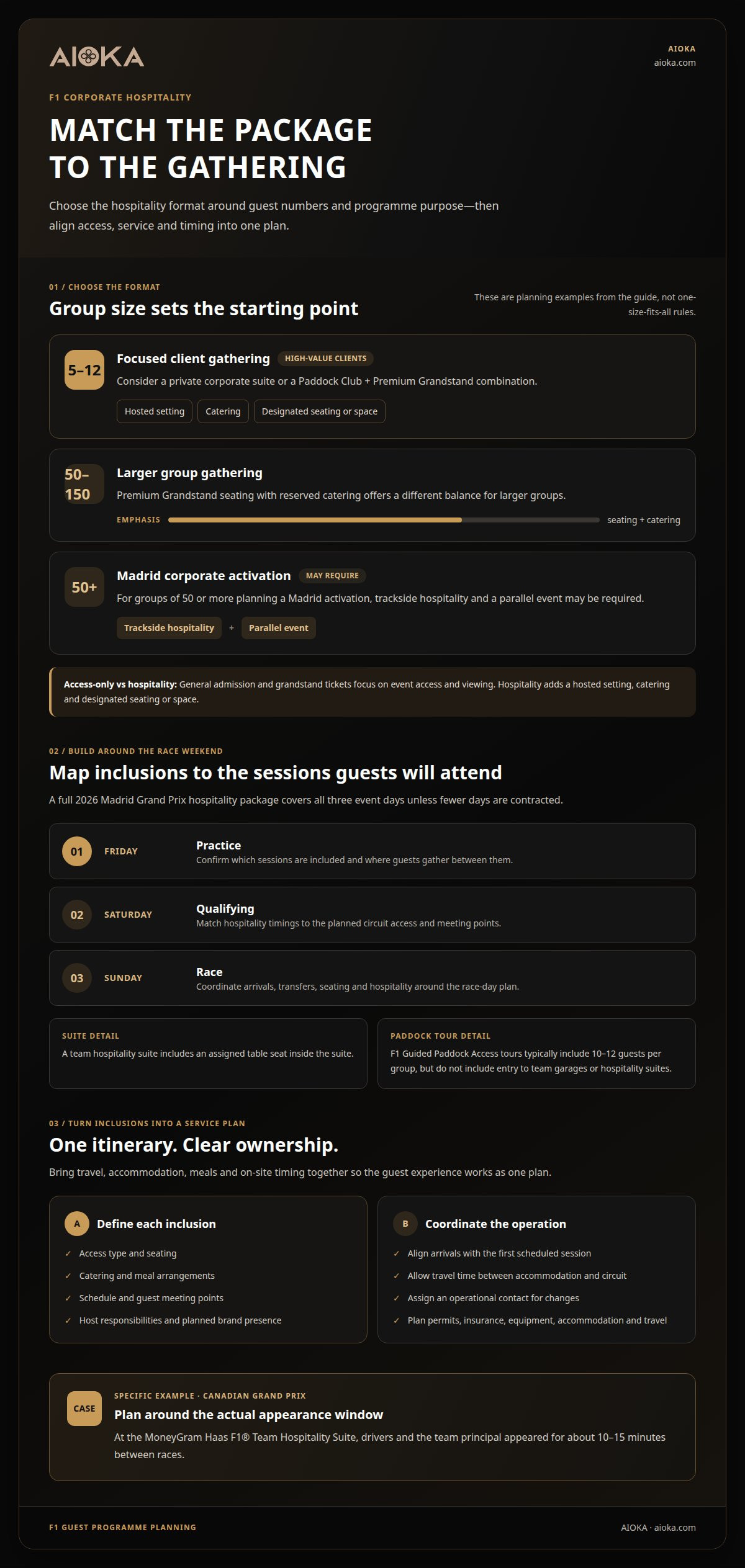
For corporate entertaining, general admission and grandstand tickets focus on event access and viewing. Hospitality adds a hosted setting, catering and designated seating or space. Choose the format based on how much time guests should spend together, not just how close they sit to the circuit.
Start with the guest profile and programme purpose. For 5 to 12 high-value clients, a private corporate suite or a Paddock Club and Premium Grandstand combination can support a more focused gathering. For larger groups of 50 to 150, Premium Grandstand seating with reserved catering offers a different balance. Groups of 50 or more planning a Madrid corporate activation may require trackside hospitality and a parallel event.
Then map inclusions against the race weekend schedule. A full 2026 Madrid Grand Prix hospitality package covers all 3 event days: Friday practice, Saturday qualifying and Sunday’s race, unless fewer days are contracted. Identify which sessions guests will attend, where they gather between sessions, and how the hospitality setting relates to their circuit access. A team hospitality suite, for example, includes an assigned table seat inside the suite.
Bring transportation, lodging, meals and on-site timing together in one itinerary. Align arrivals with the first scheduled session, allow time to travel between accommodation and the circuit, and specify meal arrangements and meeting points. Assign an operational contact to coordinate changes with partners, hosts and venue teams, so transfers, seating and hospitality timings work as one plan.
Translate each inclusion into a clear service requirement: access type, seating, catering, schedule, host responsibilities and any planned brand presence. For programmes where hospitality and activation need to work together, corporate hospitality planning can bring those elements into a coherent guest experience.
Operational planning can include permits, insurance, equipment, accommodation and travel arrangements. Check signage, credentials, catering and media access for accuracy. F1 Guided Paddock Access tours typically include 10-12 guests per group, but do not include entry to team garages or hospitality suites.
High-end sports event guests may expect exclusive zones, gourmet meals and personalized seating, so confirm these service elements. At the MoneyGram Haas F1® Team Hospitality Suite at the Canadian Grand Prix, drivers and the team principal appeared for about 10 to 15 minutes between races.
3. Safety, emergency planning and guest support
A successful race weekend depends on clear arrangements before guests arrive and calm decisions if plans change. Decide who leads the response, who communicates with guests and how the host team contacts venue staff. Share the circuit’s emergency procedures, marked exits and first-aid locations with those responsible for guest support.
Handle guest information deliberately to protect privacy and support guests appropriately. Collect only the details needed for access, essential arrangements and assistance. Restrict access to colleagues with a clear role, use secure channels to share information, and explain how it will be used. Keep sensitive details, such as accessibility or dietary needs, within the team coordinating them.
Prepare a written contingency plan for medical incidents, severe weather, transport disruption, lost credentials and changes to the meeting point. Include the venue’s emergency contact process, the designated host contact and an alternative gathering location. At Circuit of The Americas, guests facing a life-threatening emergency should immediately call 911 or notify nearby event staff, security or law enforcement.
Before the first session, brief hosts on how to spot a concern, direct guests to assistance and record an incident without delaying urgent care. Make sure the host team can access the event contact and meeting location. If a guest becomes separated from the group, for example, one host can stay with the party while another contacts venue staff.
Keep support discreet and practical throughout the day. A guest who feels unwell may need help reaching a first-aid station; someone with limited mobility may need an accessible route or suitable facilities. Build these needs into the schedule rather than treating them as last-minute requests. Clear information helps guests make informed choices and supports valuable client relationships.
After the event, document incidents, response steps and unresolved concerns through the appropriate internal process. Review what worked and what to adjust before the next race. This follow-through turns each gathering into useful operational learning, improves future guest support and helps create a composed, well-managed experience.
4. When should companies book F1 corporate hospitality and guest tickets?
For a Madrid Grand Prix corporate programme of more than 10 people, the recommended purchase window is 4 to 6 months before the event. This gives the planning team room to coordinate guest access, accommodation, travel and the programme schedule, rather than treating each decision as a separate task.
Accommodation needs an earlier view. Hotels in the IFEMA-Valdebebas area for the Madrid Grand Prix weekend typically book up 6 to 9 months in advance. For hotels in the IFEMA area, the rate difference between booking in May and booking in August can reach 200 to 300%. Set the event dates first, then align the guest programme with lodging and travel arrangements.
Transport timing also affects the plan. For the 2026 Madrid Grand Prix, transfers booked seven days before the event may cost 3 to 5 times more than transfers booked 90 days before it. Establish likely arrival and departure windows early, then coordinate transport plans with the schedule and guest requirements. Keep a clear process for communicating itinerary changes.
Use these lead times as planning anchors, not as a substitute for programme design. First define the purpose of the gathering, likely attendance and number of event days. Then determine which access and hospitality arrangements fit those decisions. For a full 2026 Madrid Grand Prix programme, plan around all 3 event days: Friday practice, Saturday qualifying and Sunday’s race, unless fewer days are contracted.
Once the event framework is set, send invitations with a clear RSVP date and a named host contact. Track replies alongside ticket allocations so the team can adjust arrangements as attendance develops. Early coordination gives international guests more time to organize travel and lodging, while helping hosts prepare final schedules.
Start shaping your race-weekend programme with a tailored corporate hospitality plan that connects guest access, event timing and hosting objectives.
AIOKA: Corporate Hospitality Packages
AIOKA brings corporate hosting objectives together with race-weekend hospitality in a considered programme. Its Corporate Hospitality Packages suit companies looking to welcome clients in elevated trackside settings, with refined culinary experiences and an environment designed to support business relationships.
For programmes where the brand presence matters as much as the guest experience, AIOKA also offers Brand Activation Services and Curated Culinary Experiences. These elements can shape a cohesive occasion, with hospitality and activation tailored to the gathering’s objectives. AIOKA has secured exclusive trackside locations and curated luxury brand activations for over 15 years.
Consider AIOKA when your plans call for a distinctive corporate setting at a Formula 1 race weekend, particularly when access, hosting and brand experience need to work together. Contact AIOKA to discuss your corporate hospitality programme.
Shape the Next Race Weekend Around Lasting Relationships
The most considered corporate event begins with a purpose beyond attendance: a conversation to advance, a partnership to deepen, or a brand impression to leave with precision. Applying F1 corporate guest management best practices means treating the race weekend as the setting for that relationship, with every hosting decision serving a clear business intention.
AIOKA’s Corporate Hospitality Packages, Brand Activation Services and Curated Culinary Experiences can translate your objectives into the guest experience. The right combination depends on the gathering’s purpose, its attendees and the atmosphere you want to create, from discreet client hosting to a more expressive brand presence.
Begin shaping a programme that reflects your priorities and gives every invitation purpose. Contact AIOKA to plan your F1 guests, and take the next step toward a race weekend designed with discernment.
Frequently Asked Questions
What are best practices for managing corporate guests at Formula 1 events?
Shape the experience around each guest relationship, not just the race schedule. Group invitees by shared interests or business context, pair them with a host who can make thoughtful introductions, and plan a natural opportunity for conversation. After a partner meeting, for example, a tailored follow-up note can refer to a discussion point and propose a relevant next step, keeping the connection purposeful beyond the circuit.


