
Luxury Corporate Hospitality for VIP Clients: Experience Ideas
How to shape a VIP client experience with care, from personal welcomes and premium travel to receptions that encourage real conversation.

A polished reception can shape a business relationship as decisively as the event itself. At live events, luxury corporate hospitality for VIP clients can bring together premium seating, catering, welcome drinks, and fast-track entry and exit. The distinction lies in how thoughtfully these elements are arranged around each guest, not simply in their exclusivity.
Premium seats and fine dining offer a strong foundation, but the moments around them often make an invitation feel personal: a considered welcome, a setting that encourages conversation, or a brand presence woven naturally into the occasion. For executives planning a client experience, each detail can support both the enjoyment of the event and the purpose of the relationship.
Explore ideas for bespoke guest experiences, premium accommodation and transport, corporate receptions, and luxury brand activations. You’ll also find a practical view of what live-event hospitality packages can include, and how culinary choices, thoughtful personalisation, and the atmosphere of a reception can turn attendance into a more distinctive shared experience.
Key Takeaways
• Shape the guest journey around personal preferences, from the first welcome to the details guests are likely to remember.
• Choose intimate or exclusive experiences that create natural opportunities for conversation and relationship-building.
• Coordinate accommodation and ground transport as part of one considered itinerary, tailored to the visit and its purpose.
• Use reception design, service, and brand elements to express your identity with restraint and coherence.
• Compare live-event hospitality options by the experience they create, not by prestige alone.
1. Bespoke VIP experiences and guest personalisation
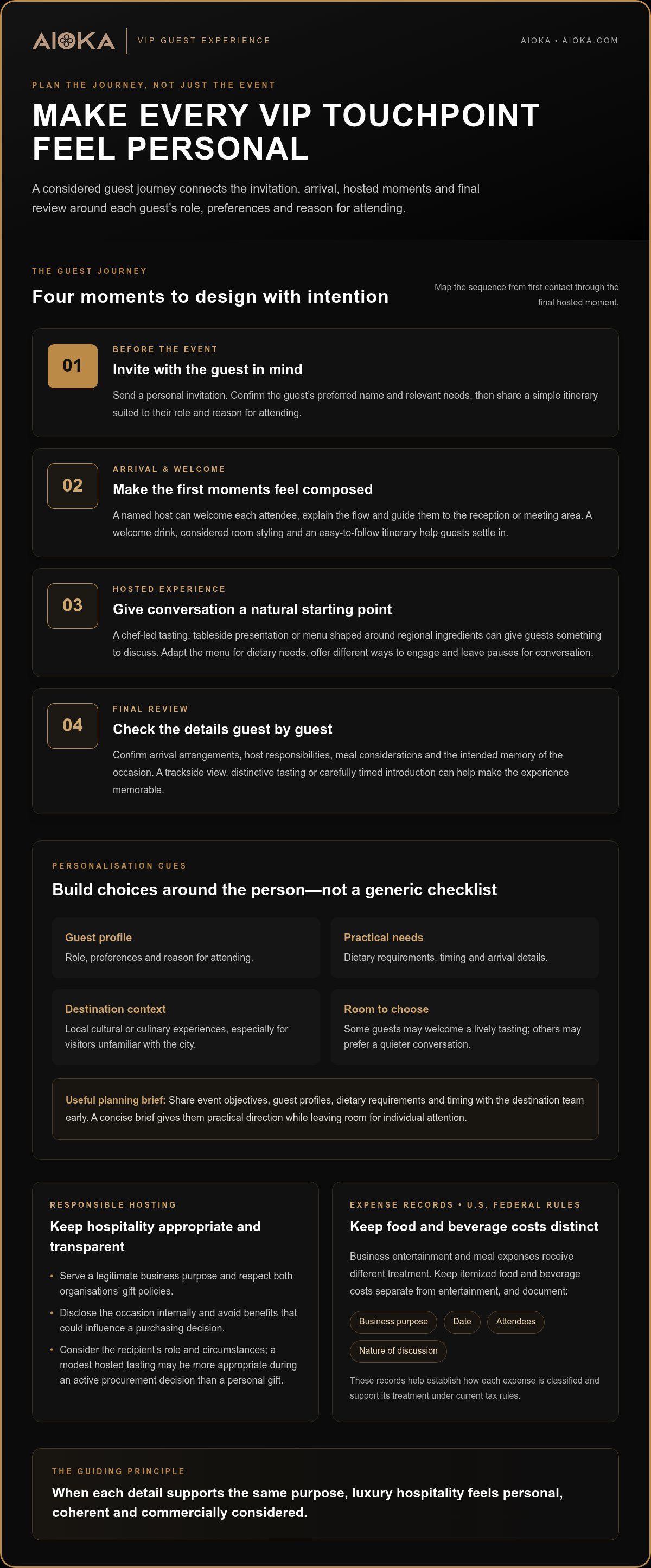
An unforgettable VIP programme begins before guests reach the venue. Map the journey from invitation and arrival through the final hosted moment, then assign a clear purpose to each stage. For example, an international guest attending a race weekend may need a tailored welcome, a simple itinerary, and a quiet place for a business call. Each choice should reflect the guest’s role, preferences, and reason for attending.
Experienced destination management providers can bring local knowledge to those decisions. They can coordinate arrival details, recommend suitable cultural or culinary experiences, and help align schedules across a city unfamiliar to visiting guests. Share the event objectives, guest profiles, dietary requirements, and timing early. A concise brief gives the destination team practical direction without reducing personalisation to a generic checklist.
Design the arrival as a sequence, not a single greeting. Before the event, send a personal invitation and confirm the guest’s preferred name and relevant needs. At the venue, a named host can welcome each attendee, introduce the evening’s flow, and direct them to the reception or meeting area. A brief welcome drink, considered room styling, and an easy-to-follow itinerary establish a composed first impression.
For US tax purposes, business entertainment and meal expenses receive different treatment under federal rules. Keep itemized food and beverage costs separate from entertainment, and document the business purpose, date, attendees, and nature of the discussion. Those records help establish how each expense is classified and support its treatment under current tax rules.
Ethical hospitality should serve a legitimate business purpose and respect both organisations’ gift policies. Disclose the occasion internally, avoid benefits that could influence a purchasing decision, and account for the recipient’s role and circumstances. For example, a modest hosted tasting during an established client event may be more appropriate than a personal gift during an active procurement decision.
Culinary experiences can invite conversation without placing guests in the position of an audience. A chef-led tasting, a tableside presentation, or a menu shaped around regional ingredients gives guests something to discuss between business exchanges. Curated dining can make the meal part of the programme’s narrative while accommodating preferences and maintaining a consistent standard of service.
Personalisation is most effective when it feels attentive rather than conspicuous. Use preferences from previous events where appropriate, adapt the menu for dietary needs, and offer more than one way to engage. Some guests may welcome a lively tasting; others may prefer a quieter conversation. Build in a pause between hosted moments, so networking remains natural rather than over-directed.
Close the planning process with a guest-by-guest review: confirm arrival arrangements, host responsibilities, meal considerations, and the intended memory of the occasion. A trackside view, a distinctive tasting, or a carefully timed introduction can make an experience memorable. When every detail supports the same purpose, luxury corporate hospitality for VIP clients feels personal, coherent, and commercially considered.
2. Exclusive and personalised VIP experiences
Exclusivity works best when it gives guests a distinctive setting and a reason to connect. Begin by defining the event’s business purpose, then shape access, hosting, and conversation around it. A product announcement, for example, may suit an intimate briefing before the wider programme begins. Selected guests can receive an early introduction, followed by discussion with the leadership team.
A private box or hospitality suite creates a setting apart from the main crowd. Depending on the package, guests may have private seating, a dedicated host, catering, and opportunities to meet sports figures. These features matter most when they support comfortable conversation, rather than simply adding prestige. Plan introductions and informal meeting moments around the event, while leaving guests room to enjoy it at their own pace.
An exclusive reception can extend that welcome before the main event. A clearly hosted space gives clients and stakeholders time to meet, settle in, and understand the day’s flow. Personalised place cards or individually selected gifts can acknowledge guests without turning the reception into a promotional display. Keep the guest list purposeful, and arrange introductions around shared interests or business priorities.
Dining offers another format for more considered conversation. A private room or chef’s table suits a small group seeking a quieter exchange. For a broader delegation, a hosted meal can provide structure while preserving space for informal introductions. Considered wine pairings and a brief visit from the head chef can give the evening character without competing with its business purpose.
For an experience beyond the circuit, consider a distinctive local activity, such as a private museum or gallery visit. A curator-led experience can provide a shared subject for discussion, while a waterfront setting or local dining offers a change of pace. Match the choice to guests’ interests, the race weekend schedule, and the degree of privacy the occasion requires. International guests may especially value an encounter with the destination.
Sports and music events can also accommodate a more personal programme. A private audience Q&A with a performer or former player may create a natural focal point, followed by a signing or photographs. Keep the format concise and connected to the occasion, so guests have time to speak with one another. In any setting, discreet hosting and attentive service help maintain the atmosphere.
Choose each element for its contribution to the relationship: a private setting for sensitive conversation, an early briefing for a launch, or an elegant meal for sustained discussion. For a distinctive dining element, consider a curated culinary experience that complements the occasion rather than overwhelming it.
3. Hotel, executive-home, and ground transportation arrangements
Plan lodging and transport as connected parts of the same itinerary. Start with each guest’s arrival point, event schedule, and destination, then map the transitions between airport, hotel, meeting, and venue. A visiting executive with an evening reception and an early meeting needs a different arrangement from a guest attending only the race. One coordinated schedule helps prevent unnecessary transfers and rushed departures.
For airport and hotel pickups, provide chauffeurs with each guest’s name, destination, and relevant preferences. A discreet welcome packet, preferred beverage, and brief itinerary can make the vehicle feel prepared for its passenger. Include the correct hotel entrance or meeting point, especially when several venues share a busy district. Clear instructions reduce uncertainty without making the welcome feel procedural.
Match the vehicle to the group and journey. An executive sedan suits an individual guest or intimate meeting; a luxury sprinter can serve a small delegation, while a motor coach accommodates a larger group. Consider luggage, travel time, and whether colleagues need to converse en route. The right vehicle balances privacy, comfort, and practical capacity rather than relying on appearance alone.
Accommodation arrangements should support the purpose of the visit. Coordinate with hotel partners on room preferences, personalised gifts, hotel perks, and gourmet dining upgrades. For example, a guest arriving before a reception may appreciate a room gift connected to the destination, while an executive with a full schedule may value convenient dining. Keep each gesture relevant to the occasion and consistent with the hospitality programme.
Some guests may travel from an executive home rather than an airport or hotel. Arrange a pickup with a luxury or corporate car company, then align the departure with the event schedule and destination. If guests arrive with luggage, arrange its transfer to the hotel before check-in. This allows them to proceed directly to a meeting or venue without carrying bags through the programme.
For complex itineraries, designate an on-site transportation captain as the central contact. The captain can coordinate dispatch communications, monitor planned movements, and guide drivers to the correct pickup locations. Share a clear itinerary with hosts and transport staff, including passenger names, destinations, and schedule changes. A single operational point of contact makes handoffs between hotels, meeting spaces, and event venues more coherent.
Before the visit, review the complete journey from the guest’s perspective. Confirm who meets each arrival, where the vehicle waits, how hotel transfers align with event timings, and what happens after the final engagement. Branded materials can reinforce the host’s identity subtly, while a brief thank-you note in the return vehicle can close the experience with a personal touch. Each transition should feel considered, not improvised.
4. Corporate receptions and luxury brand activations
A corporate reception sets the first impression before the main event begins. Shape the entrance, welcome, and room atmosphere around the brand’s character and the occasion. At a Formula 1 weekend, for example, a pre-event reception might introduce guests to the company’s identity through subtle visual details, rather than a wall of promotional messaging. A considered welcome area gives guests space to arrive, meet their hosts, and begin conversations naturally.
Design the room as a coherent composition. Lighting, music, scent, glassware, service style, and presentation each contribute to the atmosphere. Select them together: soft lighting and restrained signage can suit an intimate stakeholder gathering, while more energetic music may serve a celebratory launch. Coat check, valet parking, and attentive door staff can also make the entrance feel composed, particularly when guests arrive across a short window.
Give the reception a clear role in the event. An exclusive sponsor or stakeholder area can offer a more private setting before the main programme, with branded welcome materials or individually named corporate gifts. Working with branding specialists such as BRAND NEW Promotions | Top Promo Supplier in North Texas can help source refined, tailored merchandise that complements the atmosphere. Keep the branding visible but measured. A thoughtfully placed logo, tailored welcome note, or branded vehicle signage can reinforce identity without making every interaction feel like a sales presentation.
Brand activations become more compelling when guests can participate, rather than only observe. A tasting station, a guided product encounter, or a carefully staged reveal can create a shared focal point. At an automotive event, a presentation of design details might invite conversation about craftsmanship and innovation. The activation should connect clearly to the brand and provide guests with an experience that feels integrated into the event.
The risks of VIP hosting include a crowded entrance, unclear hosting, intrusive promotion, and gestures that conflict with a guest’s expectations. Reduce them by assigning a reception lead, planning a clear arrival flow, aligning gifts and branding with the occasion, and keeping the programme easy to follow.
Before the event, walk through the guest journey from the entrance to the reception space and onward to the main venue. Confirm where hosts stand, how guests are welcomed, and where conversations can happen without obstructing movement. A simple run sheet can align the door team, service staff, and brand activation team around the same sequence.
During the reception, hospitality should feel generous without distracting from the reason people have gathered. A short welcome from the host, followed by relaxed conversation and a distinctive culinary moment, gives the occasion shape. Service teams can keep presentation consistent by coordinating timing, table settings, and replenishment across the room.
Afterward, assess whether the activation strengthened recognition and supported the event’s business purpose. Review guest comments, host observations, and which parts of the reception prompted conversation. That reflection can guide the next event’s layout, welcome, and brand presence, preserving the details that made the experience feel distinctive.
5. What are the best luxury corporate hospitality options for VIP clients?
The strongest option depends on the event, the guests, and the relationship you want to develop. For live events, hospitality packages commonly combine fast-track entrance and exit, premium padded seating, catering, and welcome drinks. Consider how each element serves the occasion: convenient access eases arrival, while a well-placed seat keeps guests connected to the event.
Sports hospitality can suit clients who value the energy of a live match alongside a hosted meal. Packages may pair premium event access with fine dining and drinks. A private space adds separation from general event activity, giving guests a setting for conversation without removing them from the experience.
Concert hospitality offers a different atmosphere, with package details shaped around the venue and style of the event. Examples include:
Reception-led hosting
Canapés or a buffet create a relaxed beginning before guests enter the main space.
Sit-down dining
A high-end dinner gives the invitation a more formal rhythm and room for sustained conversation.
Silver music hospitality
Some packages include half a bottle of wine per person.
Platinum music hospitality
Some packages include a freshly prepared three-course meal.
For a product launch or company announcement, an exclusive breakfast briefing can be more effective than a large evening event. Selected guests receive an early introduction, followed by a focused discussion with company representatives. This format works well when the priority is clarity, discretion, and direct exchange, rather than spectacle.
Destination-led experiences can extend the invitation beyond the event venue. Local dining, a wine country visit, or a waterfront cruise can create an informal setting for networking. Private museum or gallery access offers another distinctive option, particularly when a curator-led visit connects the destination with guests’ interests.
Choose by purpose first. A race weekend may call for trackside views and refined catering; a client appreciation evening may benefit from private dining; a leadership announcement may need an intimate briefing. Then assess the programme’s pacing, privacy, guest mix, and opportunities for conversation. The best fit is the format that makes the event enjoyable while serving its business intention.
For a Formula 1 weekend, consider a tailored corporate hospitality experience that brings premium event access and guest hosting into one considered programme.
AIOKA: Corporate Hospitality Packages
AIOKA is a natural next step when your VIP programme calls for a considered Formula 1 race weekend experience. Its Corporate Hospitality Packages bring guests together in exclusive trackside locations, with high-end culinary offerings and striking views that create a setting for business relationships. For brands seeking a more distinctive presence, Brand Activation Services can shape an activation around the event, while Curated Culinary Experiences add a refined dimension to guest hosting.
Turn to AIOKA when you want the hospitality, culinary detail, and brand experience to work as one coherent programme. Visit aioka.com to explore corporate hospitality.
Shape the next invitation with intention
The most effective hospitality begins with a clear decision about what the occasion should make possible: a deeper conversation, a renewed partnership, or a more distinctive expression of your brand. Let that purpose guide the guest experience, so every element feels considered rather than assembled for display. This is the enduring value of luxury corporate hospitality for VIP clients: it gives important relationships a setting in which to develop with ease and distinction.
AIOKA brings that approach to Formula 1 through Corporate Hospitality Packages, Brand Activation Services, and Curated Culinary Experiences. If you’re shaping an upcoming event and want its hospitality to reflect both your guests and your business objectives, contact AIOKA to plan VIP hospitality. A thoughtful invitation can become the beginning of a more meaningful business relationship.
Frequently Asked Questions
What are hospitality packages for live events?
Hospitality packages combine event access with hosted services, creating a more considered experience than admission alone. A package may include premium seating, catering, welcome drinks, and facilitated entry or exit. For a concert, compare the reception format and dining with the performance schedule; for a sports event, consider sightlines and how easily guests can move between hospitality spaces and their seats. The right combination depends on the occasion and guest priorities.
What is corporate hospitality?
Corporate hospitality is a business hosting experience designed to welcome clients, partners, or colleagues in a setting that encourages connection. It might take place at a live event, over a private meal, or during a hosted reception. The company’s purpose shapes the format: a relationship-building invitation may favour informal conversation, while a product announcement calls for a more focused programme. A host should make the business context clear without allowing it to overshadow guests’ enjoyment.
What amenities and services should a VIP corporate hospitality package include?
A well-matched package should cover the essentials of the occasion, such as suitable event access, comfortable seating, food and beverages, and a clear hosting plan. Private seating or a dedicated host can add useful distinction for an intimate client group. Consider guest needs alongside the event format: a formal reception may suit canapés, while a longer hosted occasion may call for a sit-down meal. Select amenities for their relevance, not simply their number.
How do companies choose and personalize hospitality experiences for VIP clients?
Start by defining the business objective and identifying what guests should take away from the occasion. Then group invitees by relevant needs, such as their relationship to the company, interest in the event, or role in a discussion. For a product introduction, invitees may benefit from a focused presentation; for client appreciation, a relaxed shared experience may feel more appropriate. Review guest feedback afterward and apply useful preferences to future invitations.
Which venues offer premium corporate hospitality packages in major US cities?
Stadiums and concert venues offer VIP hospitality packages, which can include premium seating, fine dining, drinks, and sometimes private boxes or exclusive areas.


