F1 Trackside Entertaining: 2026 Enterprise Buying Guide
F1 Trackside Entertaining: 2026 Enterprise Buying Guide
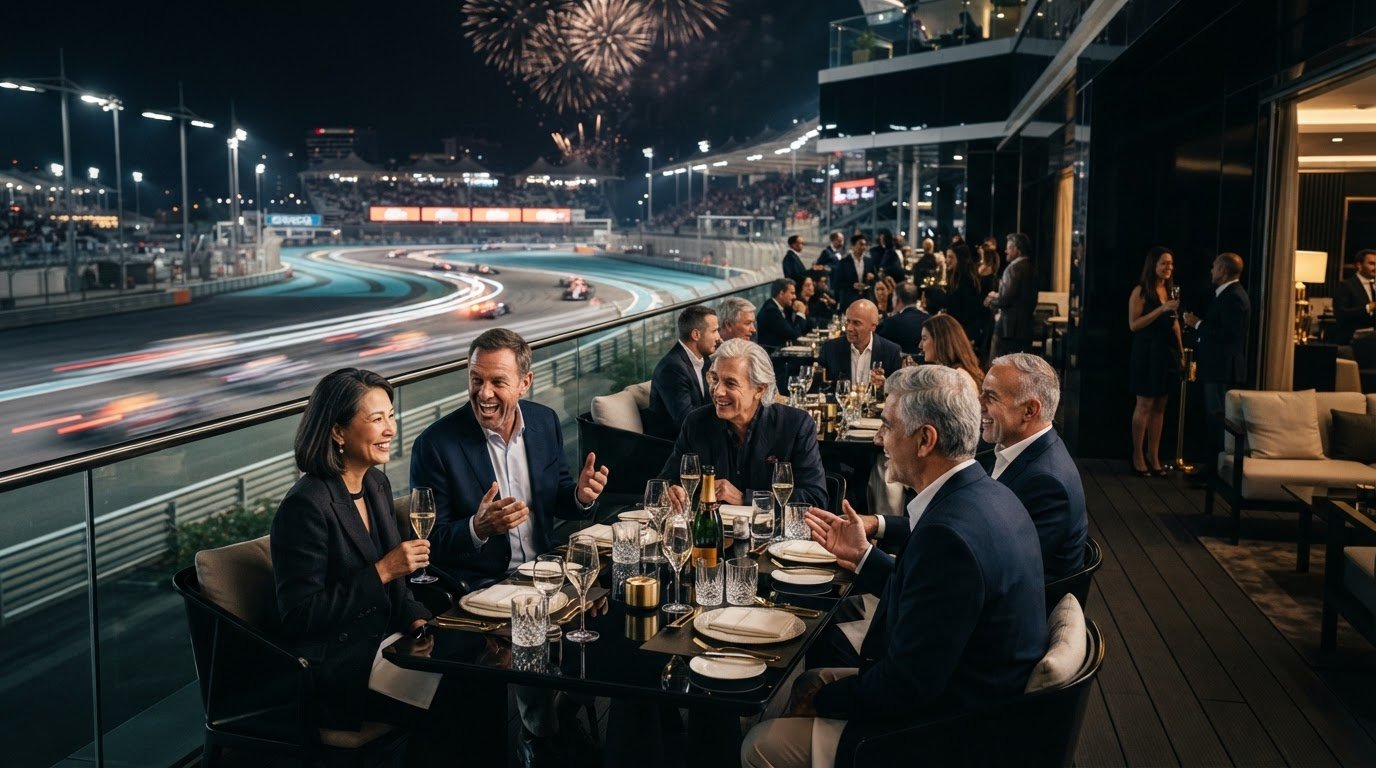
A memorable F1 weekend is not, by itself, a business outcome. The value of f1 trackside entertaining for enterprises comes from how access, hospitality and conversation are shaped around the people you invite and the relationships you want to develop.
The race provides an exceptional setting, but senior guests need more than a view of the circuit. A considered programme gives each element a purpose, from the invitation and hospitality setting to the pace of the weekend and the way your brand is represented. When those details work together, the experience feels effortless to guests and stays aligned with enterprise priorities.
This guide explores how to build a trackside experience around commercial objectives, guest expectations and thoughtful delivery. Drawing on AIOKA’s more than 15 years of experience in Formula 1 hospitality and brand activations, it covers how to coordinate access, hosting, culinary experiences and brand presence across a race weekend, then carry the relationship forward through relevant follow-up. You’ll also find a practical framework for assessing whether the experience delivered meaningful value.
Key Takeaways
• Shape f1 trackside entertaining for enterprises around the purpose of the gathering, the guests attending and the relationships you want to advance.
• Map the guest journey from invitation to departure. Consider how the setting, privacy and movement affect the pace of the occasion.
• Compare hospitality options by audience fit, viewing, access, brand presence and hosting, rather than treating race access alone as the full experience.
• Bring objectives, invitations, programme design and post-event follow-up into one plan. This creates a coherent experience and a basis for assessing its value.
• Explore how AIOKA’s more than 15 years of Formula 1 hospitality and brand activation experience, together with access to races worldwide, can inform bespoke enterprise entertaining.
F1 Trackside Entertaining for Enterprises: From Race Access to Business Purpose
A Grand Prix weekend offers a remarkable setting, but trackside entertaining becomes an enterprise experience through attention to its guests and purpose. Rather than treating race access as the whole occasion, shape a programme in which the spectacle, hospitality and time together support a specific business relationship or priority.
The circuit already commands attention. The international structure of Formula One and its celebrated Grand Prix events provide a compelling backdrop; the host’s role is to make the occasion relevant to the people gathered there. Shared attention can open the door to conversation, while thoughtful hospitality and time together can support connection beyond a formal meeting.
What makes trackside entertaining an enterprise experience?
An enterprise host creates an intentional setting for clients, prospective partners or senior stakeholders. The guest profile and business purpose should shape the event’s tone and format. Developing a relationship calls for a different emphasis from recognising an established client or engaging executive leaders. A well-designed experience can support these aims, but it cannot guarantee a commercial result.
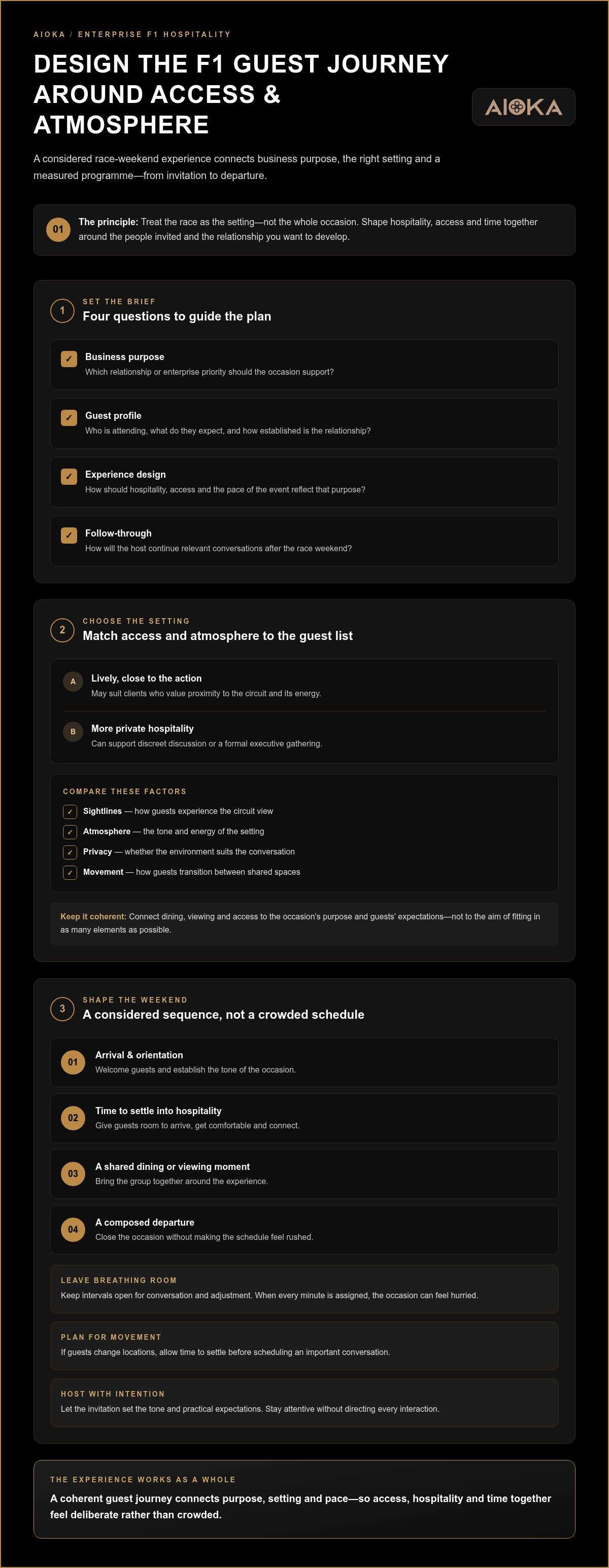
Use four questions to guide the plan:
Business purpose
Which relationship or enterprise priority should the occasion support?
Guest profile
Who is attending, what do they expect, and how established is the relationship?
Experience design
How should hospitality, access and the pace of the event reflect that purpose?
Follow-through
How will the host continue relevant conversations after the race weekend?
Which enterprise guests are best suited to a Grand Prix weekend?
Potential guests include existing clients, prospective partners, senior decision-makers and selected internal leaders. The right invitation depends on the relationship and the experience you want to create. A prospective partner may value a setting that encourages discovery, while a long-standing client may appreciate recognition and considered attention. Match the occasion’s formality and pace to guest expectations rather than relying on prestige alone.
For a broader view of package evaluation, explore the Formula 1 corporate hospitality strategic buyer guide. For enterprises, the central question is how access and hosting can serve the guests in attendance. This is the distinction at the heart of f1 trackside entertaining for enterprises: the race is the setting, while purposeful hospitality gives the gathering business relevance.
Designing the F1 Trackside Guest Journey Around Access and Atmosphere
A polished race-weekend programme is experienced as a sequence, not a list of inclusions. From the first invitation to the final departure, each transition shapes how guests feel, how easily conversation develops and how the occasion reflects its host. In f1 trackside entertaining for enterprises, give the race its full presence while making hospitality, access and time together feel deliberate rather than crowded.
How should access and venue setting serve the guest list?
Start with the guests and the conversations you hope to encourage. A lively trackside setting may suit clients who value proximity to the action, while a more private hospitality environment can support discreet discussion or a formal executive gathering. Compare sightlines, atmosphere, privacy and movement between shared spaces. The right balance depends on the audience and relationship.
Dining, viewing and access work best as connected parts of the occasion. A meal can provide a natural welcome, a circuit view can bring shared energy to the group, and a change of setting can make room for focused conversation. Choose the balance according to the event’s purpose and guests’ expectations, rather than trying to fit in as many elements as possible.
A coherent guest journey creates value through the way each moment leads to the next, not through any isolated inclusion.
How can a race-weekend itinerary feel considered rather than crowded?
Build the schedule around a few clear stages: arrival and orientation, time to settle into hospitality, a shared dining or viewing moment, and a composed departure. Leave intervals open for conversation and adjustment. When every minute is assigned, even an exceptional setting can feel hurried. A measured rhythm gives guests room to engage with one another and the event.
Plan the sequence with movement in mind. If guests are changing locations, allow time to settle before scheduling an important conversation. Let the invitation establish the occasion’s tone and practical expectations, then keep hosting attentive without directing every interaction. For further principles on preparing and welcoming business guests, see the Formula 1 client entertainment guide for business hosts.
Connect the experience to a clear business purpose. The BizBash discussion of the correlation between events and ROI offers context for considering how hosted occasions relate to business value, without treating one event as a guaranteed commercial return. Enterprises planning a tailored programme can draw on AIOKA’s trackside hospitality and brand activation expertise.
Choosing Enterprise F1 Trackside Hospitality That Fits the Brief
Start with the enterprise brief, not a list of impressive-sounding inclusions. Define the audience, relationship context and desired atmosphere, then assess whether the setting gives guests the right balance of race viewing, privacy, hospitality and brand presence. This keeps f1 trackside entertaining for enterprises from becoming spectacle without purpose, while keeping the Grand Prix central to the occasion.
Which criteria matter when comparing trackside experiences?
Consider guest seniority, the maturity of the relationship, the level of discretion required and the flexibility the programme needs. A prospective partner may benefit from a different setting than a group of established clients. Compare the complete guest experience, including dining and access, rather than judging a format by its view of the circuit alone.
| Decision criterion | Race access alone | Hosted hospitality experience |
|---|---|---|
| Audience | May suit guests chiefly attending to watch the race. | Can be shaped around clients, partners or senior stakeholders and their expectations. |
| Privacy | Conversation depends on the surrounding setting. | The hospitality environment can be selected with discretion and focused discussion in mind. |
| Viewing | Centres on the opportunity to watch the event. | Balances race viewing with time for hosting and conversation. |
| Hospitality and access | Does not, by itself, establish a wider hosted programme. | Dining, access and hosting are considered together, with details shaped to the event. |
| Brand presence | Offers limited scope for a deliberately designed host environment. | Can be discreet or more visibly branded, depending on the brief. |
Use these distinctions to clarify what matters most to your guests. A trackside suite can give a gathering a more private, executive character, while another hospitality setting may put greater emphasis on the shared atmosphere of the race. Compare the options against the needs of the particular guest group, including viewing, dining, privacy and opportunities to talk.
How can enterprise hosts frame value without overpromising ROI?
Set intended outcomes before choosing a format. These might include recognising an important client, facilitating a strategic introduction or creating an opportunity to progress an existing relationship. Then identify observable indicators, such as attendance, the quality of conversations and agreed follow-up. These measures help assess the event’s execution and relevance without implying that hospitality alone will produce revenue.
Separate immediate objectives from longer-term commercial attribution. Relationship development may continue through later discussions, so a useful review should record meaningful follow-up as well as the experience itself. That gives decision-makers a more credible basis for judging value than treating the event as a guaranteed return.
Planning a Seamless Enterprise F1 Trackside Event
A composed race-weekend event is built well before guests arrive. For f1 trackside entertaining for enterprises, connect the purpose of the gathering with the guest list, communications, hospitality and follow-up. Clear ownership across these elements helps the event feel considered to guests and coherent to the organisation hosting it.
What should enterprise hosts settle before invitations are issued?
Define what the event should support, which guest groups matter most and what tone suits those relationships. Decide who will host each group, who will manage guest communications and attendance, and how the programme should reflect brand or partner requirements. These decisions give invitations substance and provide a shared brief for everyone involved in delivery.
An invitation is the opening expression of the experience. Explain why the guest has been included, what kind of occasion is being offered and what to expect from the programme. A personal note to a long-standing client may foreground recognition, while an invitation to a prospective partner can give context to the relationship and the reason for meeting. In both cases, precise, considerate language establishes relevance without overstating what the event will achieve.
Before sending invitations, align the key planning elements:
Purpose and audience
Record the business objective, priority guests and intended relationship outcomes.
Hosting structure
Assign internal hosts and clarify responsibilities for communications and attendance management.
Experience and brand
Coordinate hospitality, the programme and any brand or partner requirements as one considered proposition.
How should hosts evaluate the event after the Grand Prix?
Make the review proportionate and useful. Record attendance, guest feedback, notable relationship conversations and agreed next actions. Distinguish what the event delivered from what may develop over time. Assign an owner to each follow-up while the context is clear; a timely, relevant note is more useful than a general message with no reference to the guest’s experience.
Review the event against its original purpose, not an assumed revenue result. Recognition, a strategic introduction or a strengthened client relationship can be meaningful outcomes, while any connection to later commercial activity may take longer to assess. This creates a useful record for future planning without promising a return that a single hosted occasion cannot guarantee.
Once your objectives, guest priorities and hosting approach are defined, discuss an enterprise trackside experience with AIOKA. AIOKA’s Formula 1 hospitality and brand activation expertise can help translate the brief into a bespoke race-weekend programme.
AIOKA’s Bespoke Approach to F1 Trackside Entertaining for Enterprises
AIOKA is an independent hospitality and brand activation agency that curates premium Formula 1 race-weekend experiences for enterprise guests. With more than 15 years of experience and access to races worldwide, AIOKA brings an international perspective to hosting and shapes each programme around the organisation’s audience, priorities and preferred tone.
For f1 trackside entertaining for enterprises, bespoke curation brings the elements of the occasion into alignment. AIOKA’s packages include trackside viewing suites, curated gourmet dining and private client entertaining facilities. Together, these elements can support different kinds of gatherings, from a discreet client occasion to one centred on the shared atmosphere of the race. The key is to shape the environment and programme around the guests and the purpose of hosting.
How does bespoke curation connect experience design to enterprise aims?
The guest profile and business purpose inform the choices that give an event its character: location, hosting style, dining and programme flow. A brand activation can extend the hospitality experience when it adds relevance for guests and supports the brief, rather than competing with the occasion. AIOKA brings hospitality and activation planning together so each element has a considered role and the programme suits the enterprise’s aims.
What should an enterprise brief communicate to begin planning?
A clear brief gives the planning process a strong foundation. It need not prescribe every detail; it should describe the occasion the organisation wants to create and the context in which it will host. Useful points include:
Race-weekend context
The event or market under consideration and the broader hosting purpose.
Guest profile
Who will be invited, the nature of the relationships and the tone they would value.
Business objective
The intended focus, such as client recognition, executive engagement or partner relationships.
Experience direction
Preferences for hospitality, culinary experience, privacy, viewing and any relevant brand activation.
With these priorities articulated, AIOKA can shape a tailored trackside experience around the guest journey and enterprise aims. Explore AIOKA’s bespoke F1 trackside experiences.
Shape a Race Weekend With Purpose
The most considered f1 trackside entertaining for enterprises begins with a clear brief: who you’re hosting, what the occasion should support and how the experience can reflect those priorities. Match hospitality and access to guest expectations, then shape a coherent journey from invitation through follow-up. This makes the Grand Prix more than a remarkable backdrop. It creates a thoughtful setting for recognition, conversation and relationship development, without treating commercial outcomes as guaranteed.
AIOKA brings more than 15 years of Formula 1 hospitality and brand activation experience, with access to races worldwide. Trackside hospitality, curated culinary experiences and brand activation services can be brought together around your guests and the purpose of the event, rather than a fixed template.
With your objectives and guest profile in view, shape a bespoke F1 trackside experience with AIOKA. A well-designed race weekend can bring business relationships and the spectacle of Formula 1 into a more meaningful conversation, giving your guests an occasion they’ll be pleased to remember.
Frequently Asked Questions
What is F1 trackside entertaining for enterprises?
F1 trackside entertaining for enterprises is a hosted race-weekend experience designed for clients, partners or senior stakeholders. It brings together a trackside setting, hospitality and purposeful time with guests. When planned around the audience and organisation’s aims, it can support relationship development, recognition or executive engagement. Race access alone does not establish a business outcome, so define the purpose of hosting before shaping the programme.
How can a company use F1 hospitality for client entertainment?
A company can use F1 hospitality to welcome clients in a distinctive setting, recognise an established relationship or create space for conversation with a prospective partner. Begin with a clear guest list and reason for hosting, then shape the setting, itinerary and level of formality around the attendees. An established client gathering may emphasise recognition, while a partner occasion may prioritise introductions and conversation. Plan relevant follow-up after the weekend.
What should enterprises compare when choosing F1 trackside hospitality?
Compare each experience against your brief rather than judging one inclusion in isolation. Consider the guest profile, privacy, viewing, hospitality, culinary experience, access, opportunities for conversation and potential brand presence. A discreet executive gathering may need a different atmosphere from a client event centred on shared race viewing. Assess the chosen package’s actual features against the priorities you have set for the event.
How do you measure the value of corporate F1 hospitality?
Set objectives before the event, then review indicators such as attendance, guest feedback, the quality of conversations and agreed next steps. These measures help show whether the occasion served its relationship or engagement purpose. Record who owns each follow-up and note the context of the discussion while it remains clear. Revenue attribution may take longer and can involve other influences, so a single hospitality event should not be presented as guaranteeing new business or a specific return.
Can an F1 trackside event include a brand activation?
Yes. A brand activation can complement F1 hospitality when it supports the event’s purpose and suits the guests and setting. Consider whether the idea enriches the hosted experience or distracts from conversation and the race. Some briefs call for a discreet brand presence, while others may benefit from a more immersive element. Integrate the activation with the broader programme so the guest journey feels coherent rather than divided between hospitality and promotion.
How far in advance should an enterprise plan F1 hospitality?
Begin planning early enough to define the purpose, guest profile, preferred race-weekend context and experience requirements before invitations are issued. The appropriate lead time depends on factors such as the Grand Prix, venue and programme complexity. A clear brief gives planning direction and supports coordination across hospitality, guest communications and activation requirements. With the core priorities set, shape the programme around the intended audience and occasion.
What should be included in an enterprise F1 hospitality brief?
An enterprise F1 hospitality brief should outline the purpose of hosting, priority guest groups, preferred race-weekend context and desired tone. Include intended relationship outcomes, hospitality preferences and any brand activation objectives, along with expectations for guest communications and internal hosts. For example, a brief might prioritise client recognition and a discreet setting, or partner engagement with a more visible brand element. This foundation helps tailor the programme to the event.
Is Formula 1 corporate hospitality only for existing clients?
No. Enterprises can host existing clients, prospective partners, senior stakeholders or selected internal leaders, depending on the occasion’s purpose. The guest list should reflect the relationships the organisation wants to recognise or develop. For a mixed group, consider whether the atmosphere, level of formality and programme will feel relevant to everyone invited. Clear hosting objectives help make the event intentional, rather than simply assembling guests around a race weekend.
Watch the story unfold from the paddock
Since 2012, AIOKA has hosted guests for brands like Microsoft, Marriott and Red Bull at Formula 1 race weekends. Let us plan yours.
Enquire about F1 hospitality