Experiential Gifts for VIP Clients: How Much Should You Spend
How to budget for VIP client experiences, match gifts to conferences, galas and retreats, and make each gesture feel personal rather than promotional.
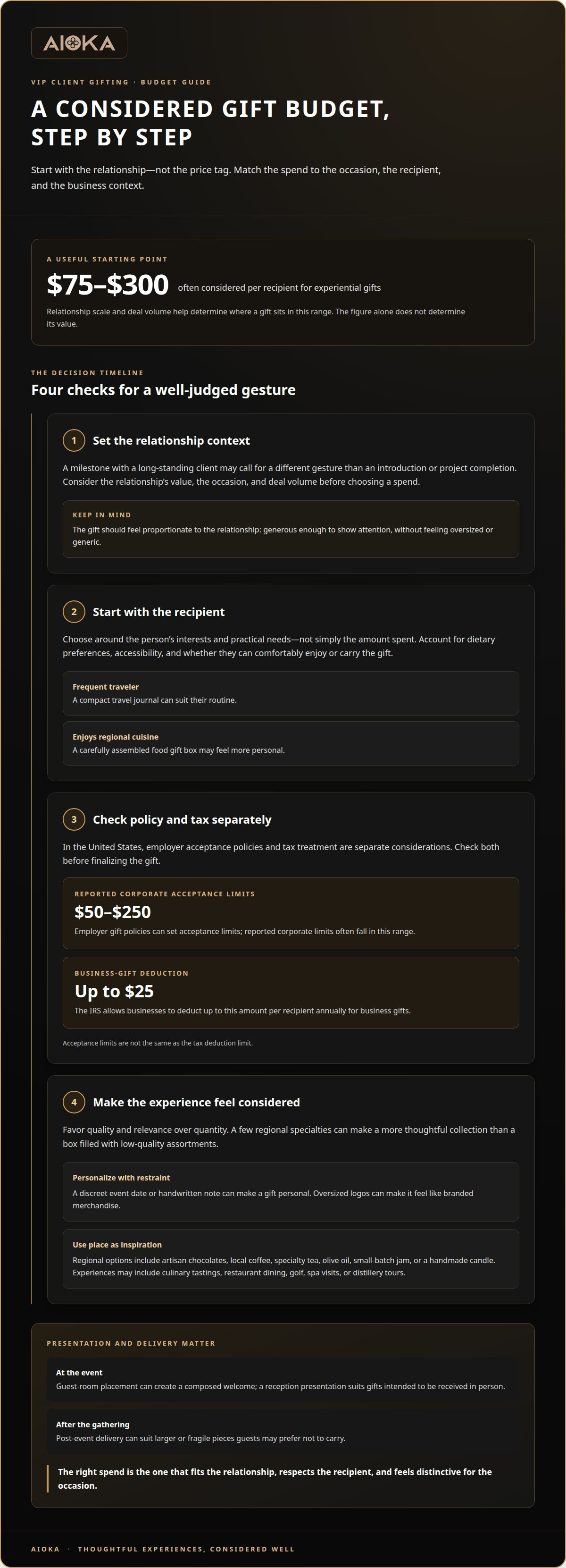
The most memorable VIP gift is rarely the most expensive; discernment matters more than spectacle. A considered budget for experiential gifts for VIP clients is often $75 to $300 per recipient, with relationship scale and deal volume shaping where a gift sits within that range. The experience should feel proportionate to the relationship and distinctive enough to be remembered.
It is natural to weigh the budget carefully: a generous gesture can signal attention, while an oversized or generic one may feel out of step. The figure alone does not determine value. The occasion, recipient’s preferences, and significance of the relationship all matter.
This guide explains how to choose a thoughtful spend, match experiences to conferences, galas, retreats, and incentive travel, and select gifts that support genuine client relationships. It also covers the details that make a gesture feel well judged, from personalization and presentation to the lasting connection a shared experience can create.
Key Takeaways
• Set a gift budget by weighing the relationship’s value, the occasion, and the recipient’s preferences, while keeping tax treatment in view.
• Shape event gifts around the format and setting, with portability and local meaning guiding choices for different gatherings.
• Make a gesture feel personal by connecting it to a shared milestone or partnership, rather than relying on prominent branding.
• Consider how curated hospitality and culinary experiences can turn client appreciation into a more memorable shared occasion.
1. How Professionals Determine How Much to Spend on VIP Client Gifts
Professionals shape a corporate gift budget around the relationship, occasion, and recipient. A milestone with a long-standing client calls for a different gesture than an introduction or project completion. The most meaningful experiential gifts for VIP clients reflect the recipient’s interests, not simply the amount spent.
In the United States, employer gift policies can set acceptance limits, and reported corporate limits often range from $50 to $250. The Internal Revenue Service allows businesses to deduct up to $25 per recipient annually for business gifts. Tax treatment and acceptance policy are separate considerations, so professionals account for both when shaping a corporate gift.
Start with the recipient. A frequent traveler may appreciate a compact travel journal, while a host who enjoys regional cuisine may value a carefully assembled food gift box. Consider dietary preferences, accessibility, and whether the recipient can comfortably enjoy the experience.
Presentation should feel considered, not promotional. A discreet event date or handwritten note can make a gift personal, while oversized logos may make it resemble branded merchandise. Curated collections prioritize premium quality over quantity, pairing a few regional specialties rather than filling a box with low-quality assortments.
For conferences and private events, gifts can be placed in guest rooms, presented at a reception, or delivered after the gathering. Hotel-room placement creates a composed welcome; post-event delivery suits larger or fragile pieces that guests would rather not carry.
Local sourcing gives a gift a stronger sense of place. A regional collection might feature artisan chocolates, local coffee, specialty tea, olive oil, or small-batch jam, with a handmade candle adding a wellness element. Common experience choices across industries include culinary tastings, restaurant dining, golf, spa visits, and distillery tours. At destination events, connect the selection to regional food and culture; for conferences, choose compact keepsakes suited to travel.
2. How Professionals Match Gifts to Conferences, Galas, Retreats, and Incentive Travel
For a conference, connect the gift with the host city and future use. A custom travel journal bearing the recipient’s name or event date suits frequent business travel. A compact notebook fits easily into luggage and remains useful after the event. Host-city photography books offer another memorable keepsake, especially for returning association attendees.
At a nonprofit gala, gifts can celebrate the local community or a meaningful landmark. A framed print or locally made serving piece gives donors and board members a lasting connection to the occasion. For a holiday gala, a restrained custom detail can mark the evening without turning the gift into promotional merchandise.
Retreats invite a more immersive approach. Pair a regional culinary experience with a small local specialty to connect the gift to its destination. A curated wine or distillery tasting can suit an intimate gathering; a spa visit may better complement a restorative retreat. Let the event’s purpose and guests’ preferences guide the choice.
Incentive travel calls for gifts that travel well and feel useful beyond the itinerary. Leather travel organizers and personalized travel accessories offer practical value, while compact photography books recall a destination without taking up substantial luggage space. Professionals consider how the item will be carried, presented, and used after guests return.
The best experiential gifts for VIP clients connect a distinctive moment with the recipient’s interests. Culinary tastings, restaurant dining, golf days, spa experiences, and distillery tours are options for corporate gifting in the United States. For clients drawn to luxury travel and high-performance motoring, providers such as Supercar Holidays illustrate how bespoke driving itineraries can elevate experiential gifting into a world-class adventure. Unlike traditional luxury corporate gifts, an experience creates a shared occasion; a crafted accessory or photography book offers a tangible reminder. A considered program can combine both, pairing an event with a locally inspired keepsake. The format, destination, and guest list determine which gift ideas feel most appropriate.
3. How Professionals Choose Gifts That Strengthen Client Relationships
First define the relationship purpose behind the gesture. Recognizing a partner’s contribution calls for a different approach than opening a new conversation. A gift should acknowledge the person’s role in the relationship, not serve as an indirect request for a renewal, referral, or faster decision. That distinction preserves sincerity.
Use context gathered through ordinary business interactions. An account team may note that a client values cultural programming, prefers intimate conversation, or enjoys learning about regional craft. These details can guide a more fitting experience than assumptions based on title or industry. Use relevant observations discreetly, keeping the gesture respectful and appropriate.
Relationship continuity matters, too. A thoughtful experience can create a natural point of connection for later dialogue, especially when it reflects a topic both parties have discussed. A client who has spoken about architecture, for example, may appreciate an event shaped around design. The shared reference gives future conversations a personal dimension without forcing familiarity.
Strong gifting also respects the recipient’s autonomy. Avoid attaching an immediate business request to the gesture, so appreciation does not feel conditional. Make the purpose clear in the invitation or accompanying message, then let the recipient engage on their own terms. This separates relationship care from negotiation and protects trust.
Before finalizing a choice, consider whether it feels authentic to the relationship, appropriate to the business context, and distinct from routine gestures. Think about the host’s role and how the experience will bring people together. A considered choice can acknowledge the partnership without overstating intimacy, helping the relationship develop with tact, mutual respect, and a clear sense of purpose.
4. Benefits of client appreciation gifts
A thoughtful gift turns a completed project into a shared reference point. A personalized note naming a launch or anniversary shows why the moment matters. The recipient sees appreciation tied to a real contribution, not an automatic corporate gesture. That distinction can make future conversations feel more considered and give executive partners a tangible reminder of the relationship’s progress.
A shared experience creates room for conversation beyond the agenda. A hosted dinner after a product launch, for example, can bring partners together without another presentation. The setting gives colleagues time to exchange perspectives and recognize the work behind the milestone. These moments can strengthen familiarity, while the occasion becomes part of the relationship’s history.
Lasting value comes from fit, not extravagance. A durable travel organizer may suit a client who regularly visits project sites; a premium notebook may support someone who takes notes in every meeting. The object remains useful after the event, unlike disposable promotional merchandise. Thoughtful selection reflects attention to habits and makes the gift feel chosen for its recipient.
Presentation shapes the first impression. A carefully wrapped regional object accompanied by a concise note feels more personal than a box filled with branded items. For enterprises managing recurring custom packaging and logistics needs across their corporate gifting programs, providers like Packaging For Industry (PFI) support fulfillment through vendor-managed inventory solutions. Subtle identification can acknowledge the occasion without turning appreciation into advertising. For a client milestone, a discreet date or reference to the shared achievement keeps the focus on the partnership.
Make gifting more meaningful by linking each gesture to a clear purpose: welcoming a new partner, recognizing a shared achievement, or marking a continuing relationship. Match the choice to the recipient, occasion, and desired tone. Luxury matters less than coherence. A well-presented gesture feels sincere when its details reflect genuine knowledge of the relationship.
For a gathering that turns appreciation into a shared occasion, shape a considered client hospitality experience around its purpose and guests.
AIOKA
AIOKA shapes VIP client appreciation around the occasion, guest relationships, and business objectives. Its Corporate Hospitality Packages, Brand Activation Services, and Curated Culinary Experiences offer distinct ways to bring clients together and create a considered setting for meaningful connection.
This approach suits companies seeking a shared experience that feels more personal than a conventional gift. The format can reflect the event’s purpose and the relationship the host wishes to recognize.
Contact AIOKA to plan client gifts.
Shape a Gesture Around the Relationship Ahead
Design the next client gesture with the relationship’s future in mind. Consider what the next meaningful interaction should make possible, whether a more open conversation, a renewed sense of connection, or recognition of shared progress. Experiential gifts for VIP clients can give that intention a thoughtful form without making the gesture feel transactional.
A considered plan begins with the moment you want to create and the people you want to bring together. From there, shape the details to suit the business context and the tone you wish to set.
Contact AIOKA to plan client gifts and give your next gesture a clear purpose.
Frequently Asked Questions
How Do Professionals Determine How Much to Spend on VIP Client Gifts?
Set the amount by weighing the relationship’s commercial significance, the occasion, and the recipient’s organization policies. A project milestone may warrant a more considered gesture than a routine meeting, while a senior client’s preferences can guide whether an experience or keepsake is appropriate. Aim for proportionality: a gift should feel attentive without creating discomfort or appearing tied to a business decision.
How does a professional provider help a company determine how much to spend on a VIP client gift?
A professional provider translates company objectives into a practical brief, considering the guest profile, occasion, format, and desired level of hospitality. A small executive gathering, for example, has different needs from a client event built around a major company milestone. This process directs resources to the details guests experience directly, such as the setting, culinary program, and personal touches, rather than choosing a figure in isolation.
How can a professional provider personalize experiential gifts for VIP clients?
Shape an experience around the relationship’s purpose, the host’s identity, and the guests attending. A business celebrating a partnership, for example, might incorporate a discreet reference to the shared achievement into the event’s welcome or dining experience. Thoughtful hosting and a cohesive setting can also make the gesture distinctive without conspicuous logos or generic branded merchandise.
How can a professional provider arrange VIP tickets, dining, travel, or wellness experiences?
AIOKA’s work centers on Formula 1 corporate hospitality, including Corporate Hospitality Packages and Curated Culinary Experiences. These can bring client hosting and dining together within the race-weekend setting. The emphasis is on creating a considered hospitality occasion, rather than treating tickets, travel, dining, and wellness as interchangeable gifts. Companies can shape the event around its purpose, guest relationships, and desired atmosphere.
What risks or etiquette issues should companies consider when gifting experiences?
Before extending an invitation, account for the recipient’s gift policy, dietary needs, accessibility, schedule, and comfort with the event format. A lavish invitation may be unsuitable during a sensitive procurement decision, while a poorly timed event can feel burdensome. Clear details about the occasion and host help recipients make an informed choice. Discreet presentation and a genuine message of appreciation keep the focus on the relationship.