Curated Culinary Hospitality at the Grand Prix: A More Considered Way to Host
Curated Culinary Hospitality at the Grand Prix: A More Considered Way to Host

At a Grand Prix, a memorable meal is more than a pause between sessions. A curated culinary hospitality Grand Prix programme brings the menu, setting and race-weekend rhythm together, so dining feels connected to the occasion rather than like a generic interval. Thoughtful service gives guests time to talk without competing with the spectacle.
For hosts welcoming clients, the challenge is to make the gathering feel both refined and purposeful. The race schedule shapes when guests can dine and talk, while an impressive menu alone won’t guarantee a meaningful experience. This article explains how to plan dining around the pace of race weekend, guest preferences and the character of the setting, so the occasion feels distinctive and well considered.
Key Takeaways
• Curated culinary hospitality at the Grand Prix connects food, setting, service and guest experience, rather than relying on an impressive menu alone.
• Use dining moments to welcome guests, offer a pause in the race-day rhythm and make room for purposeful conversation.
• Distinctive hospitality depends on relevance, coherence and thoughtful pacing, not extravagance.
• Shape culinary choices around the hosting purpose, guest mix and setting.
• Trackside locations, curated gourmet dining and private client-entertaining facilities can work together to create a considered race-weekend experience.
Curated Culinary Hospitality at a Grand Prix: Beyond the Menu
Curated culinary hospitality at a Grand Prix is the deliberate coordination of food, setting, service and guest experience to support the purpose of hosting. It is not about choosing the most prestigious menu. It is about making dining feel right for the guests, the surroundings and the occasion.
Providing refreshments meets a practical need; curation gives them a role in the event. The menu, its presentation and the moment it is served all shape the guest experience. A refined menu can feel disconnected if it clashes with the event’s tone or leaves little room for conversation. Simpler choices can feel distinctive when they fit the host’s intentions.
The Grand Prix setting makes this alignment especially important. Grand Prix motor racing combines competition, spectacle and a live event environment, creating a distinctive backdrop for corporate entertaining. The circuit shapes the atmosphere, while the schedule sets the pace. Dining should complement the occasion without making guests choose between the hosted experience and the action they came to see.
What makes Grand Prix dining feel curated?
Start with two questions: what should guests experience, and what does the host want the gathering to achieve? A client reception may call for a different mood from an occasion focused on deepening established relationships. With the purpose clear, menu character, presentation and setting can be planned together instead of as separate decisions.
Timing is part of the design. A hosted meal may create a natural pause between track activities; a more flexible dining arrangement may suit guests moving between conversation and viewing. There is no fixed formula. The aim is to make the style and scale of dining fit the occasion. Curated culinary hospitality Grand Prix planning is about considered choices, not complexity for its own sake.
Where food and drink sit within corporate hospitality
Dining is one part of a wider hospitality experience, alongside the trackside view and private space for entertaining clients. The circuit supplies energy and context, the setting gives guests room to connect, and food and drink help shape the welcome and flow of the gathering.
A shared meal gives guests a common focus beyond formal introductions. In a well-planned programme, dining supports the host’s objective without taking over the day. This is also the principle behind Formula 1 corporate hospitality packages: the setting, guest experience and purpose of hosting work together, rather than relying on any single feature.
How Culinary Choices Shape the Grand Prix Guest Experience
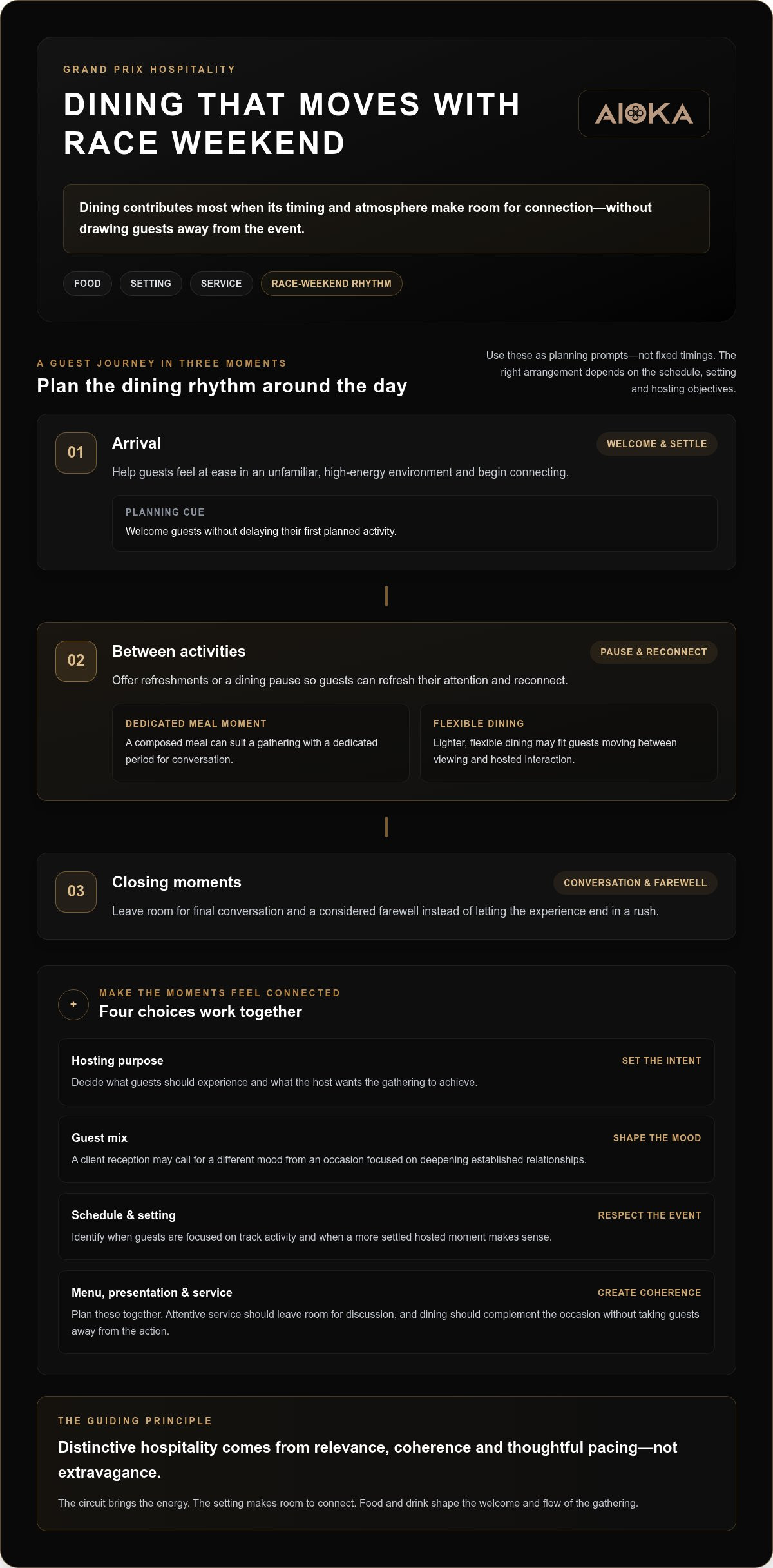
A hospitality experience unfolds as a sequence, not a single meal. Guests arrive in an unfamiliar, high-energy environment; a considered welcome helps them settle into the setting and begin connecting. As the day develops, dining and refreshments can provide a pause. At the close, allow room for final conversation rather than ending the experience abruptly.
At a Grand Prix, dining contributes most when its timing and atmosphere make room for connection without drawing guests away from the event. Food and service should support the guest journey while respecting the changing focus of race weekend.
Balancing the race programme with moments at the table
No single timetable suits every Grand Prix or hospitality setting. Build the dining rhythm around the planned programme for the event. Identify when guests are likely to focus on track activity and when a more settled hosted moment makes sense. The Fédération Internationale de l'Automobile (FIA) provides the official context for international motor sport; for hospitality planning, the practical question is how the event schedule shapes the occasion.
A composed meal can suit a gathering with a dedicated period for conversation. Lighter, flexible dining may be a better fit when guests are moving between viewing and hosted interaction. Consider the purpose of each moment:
Arrival
Welcome guests and help them settle without delaying their first planned activity.
Between activities
Offer refreshments or a dining pause so guests can reconnect and refresh their attention.
Closing moments
Leave time for conversation and a considered farewell instead of letting the experience end in a rush.
Use these as planning prompts, not fixed timings. The right arrangement depends on the event schedule, setting and hosting objectives.
Creating space for conversation without losing the occasion
Conversation flows more naturally when guests can move between the spectacle of the circuit and the intimacy of a hosted space. Service should be attentive without repeatedly interrupting discussion. The dining setting should be comfortable without feeling so removed from the race that the occasion loses its character. The aim is coherence: guests stay connected to the event while having room to build rapport.
This matters in Formula 1 client entertainment, where the experience should make clients feel welcome rather than turn every interaction into a formal business appointment. Food can provide a shared focus while leaving room for individual conversation, viewing and the natural shifts in energy across the day.
For an integrated race-weekend experience, explore AIOKA’s curated hospitality experiences, which bring dining together with the setting and private client-entertaining space.
Curated Dining or Generic Catering: What Changes for Guests?
Guests may not consciously compare a dining plan with a catering checklist, but they notice whether the experience feels connected to the occasion. Generic catering can serve refreshments efficiently. Curated dining considers how the menu, presentation, setting and hosting purpose fit together. Neither approach is defined by a particular level of formality or expense.
The difference becomes clearer across four practical dimensions. These contrasts are not judgements about quality; they show how an event’s priorities shape guest-facing choices. Use them to assess whether each detail in your curated culinary hospitality Grand Prix plan serves the gathering.
| Consideration | Generic catering | Curated dining |
|---|---|---|
| Relevance | Provides familiar food and drink to meet general needs. | Reflects the occasion, guest expectations and purpose of hosting. |
| Coherence | Menu and setting may be planned separately. | Presentation, service and surroundings feel connected. |
| Pacing | Follows a standard service pattern. | Is shaped around the event’s planned moments and guest flow. |
| Guest experience | Prioritises refreshment and convenience. | Uses dining to support welcome, comfort and connection. |
The limits of a menu-first approach
An impressive menu can still feel out of place if it doesn’t suit the gathering or setting. A lengthy meal, for example, may compete with planned viewing, while a formal presentation may not fit a relaxed client reception. These are considerations, not fixed rules. The same menu can feel different depending on the service rhythm, surroundings and attention guests are expected to give the event.
Premium ingredients alone don’t create meaningful hospitality. Consider whether the whole experience feels appropriate, from the welcome to how easily guests can move between dining and other activities.
The markers of a considered culinary experience
Culinary intention is the art of making guests feel considered; display is simply the art of being noticed. Assess whether food, service, setting and schedule support one another instead of judging any single element in isolation.
Thoughtful choices also make room for different guest preferences without turning the meal into a performance. In curated culinary hospitality grand prix design, details should serve the guest experience, not distract from the event. Prioritise clarity, ease and an appropriate level of refinement, while keeping the occasion central.
Planning Grand Prix Culinary Hospitality Around Guests and Setting
Start planning before choosing the menu. A clear sequence helps align decisions with the people attending, the purpose of the gathering and the race-weekend setting. For curated culinary hospitality at a Grand Prix, work through these four stages:
Clarify the purpose
Decide whether the gathering centres on client relationships, executive entertaining or a brand-hosting objective.
Understand the guests
Consider how well they know one another, the level of formality, dietary preferences and accessibility needs.
Align the setting
Consider how the trackside environment and entertaining space shape the occasion.
Shape the dining
Choose a culinary direction and service rhythm that support the guest journey and event programme.
Beginning with the guest profile and hosting purpose
The conversation you hope to encourage should guide the tone. A host welcoming prospective clients may want an atmosphere that makes introductions easy. Established partners may benefit from a relaxed setting for deeper discussion. Executive entertaining may call for a different level of formality from a brand-hosting occasion designed to express a company’s character. The guest list is more than a record of attendance; it helps define how the occasion should feel.
Consider how well guests know one another, whether the gathering is mainly social or business-focused, and what impression the host hopes to leave. Dietary preferences and accessibility needs also matter. Gathering this information early helps shape the experience without assuming that one menu or service style will suit everyone.
Bringing culinary direction into the wider event setting
Once the hosting purpose and guest profile are clear, connect the dining experience to the setting. A trackside view brings the race into the gathering; private entertaining space gives guests a more composed setting for conversation. Culinary choices should respond to both, complementing the occasion without competing with the atmosphere.
Map dining moments against the guest journey: when people will arrive, spend time together and engage with the event. The balance between a composed meal and flexible dining depends on the programme, not on a universal Formula 1 timetable. Plan the menu, service and schedule as parts of the same experience.
AIOKA brings together trackside locations, curated gourmet dining and private client-entertaining facilities as part of a wider corporate hospitality experience. Plan a considered Grand Prix hospitality experience around your guests, setting and hosting purpose.
AIOKA's Approach to Curated Culinary Hospitality at the Grand Prix
AIOKA creates premium corporate hospitality at Formula 1 race weekends, bringing together trackside locations, curated gourmet dining and private client-entertaining facilities. Each element has a distinct role; the experience is most coherent when they reflect the host’s objectives and the guests being welcomed.
With more than 15 years of experience securing trackside locations and curating brand experiences, and access to Formula 1 races worldwide, AIOKA considers dining alongside the setting and rhythm of the event rather than as an isolated feature. This provides a deliberate foundation for hosting, shaped around the character and purpose of the gathering.
Culinary curation within a complete hospitality experience
Dining helps define the tone of a Grand Prix gathering, but it does not need to carry the entire experience. The trackside setting connects guests to the race; private entertaining space gives them room to gather; and culinary direction adds welcome and refinement. Considered together, these elements can make the occasion distinctive and suited to its purpose.
The purpose might be to introduce clients to a business, strengthen established relationships or host guests in a setting that expresses a brand’s character. Each objective calls for a different emphasis, which is why curation begins with the host’s intentions and the people attending. AIOKA brings the components of corporate hospitality together so dining complements the guest experience and wider race-weekend programme.
The practical value is a coherent experience: a setting suited to the occasion, considered dining and space for the host’s objectives to remain clear without making the gathering feel overly formal. No single feature needs to dominate. Together, they create an environment that feels polished, welcoming and connected to the event.
From a Grand Prix gathering to a lasting business relationship
Meaningful business relationships develop over time; a single event cannot guarantee an outcome. Attentive hosting can, however, create room for conversation by giving guests a shared experience and an environment where discussion can unfold naturally. A well-timed dining moment offers a pause in the day, while the race gives the gathering a memorable point of reference.
This is the role of curated culinary hospitality at the Grand Prix: bringing people together with care and intention, not promising a commercial result. When food, setting and hosting purpose align, guests can feel that their time and presence have been considered. AIOKA shapes these details as part of the wider corporate hospitality experience, with each gathering built around its objectives.
Explore AIOKA’s corporate hospitality approach for a considered way to host at a Formula 1 race weekend.
Shape Your Next Grand Prix Gathering with Intention
Turn your hosting ambition into a clear plan: decide who you want to bring together, what kind of conversation the occasion should encourage, and how the race weekend can give that exchange its own character. With those priorities in view, curated culinary hospitality grand prix planning is less about collecting impressive details and more about creating an experience that feels considered by the people attending.
A concise brief can make that vision practical. Note the intended guests, the purpose of the gathering, the tone you hope to establish and any requirements that should shape the programme. These choices provide a foundation for designing hospitality around your business relationships instead of defaulting to a format that could belong to any event.
Consider what you want guests to remember beyond the spectacle: an easy welcome, a valuable conversation or the feeling that the occasion was shaped with them in mind. A clear intention can guide decisions while leaving room for the race weekend to unfold naturally.
To plan your next Formula 1 gathering, explore AIOKA’s curated Formula 1 hospitality and create an occasion guests will remember for its welcome and the conversations it made possible.
Frequently Asked Questions
Is curated culinary hospitality at a Grand Prix the same as fine dining?
No. Fine dining generally describes a style or level of service, while curation is about how dining choices serve a particular gathering. A relaxed reception can be carefully curated if its food, presentation and service suit the guests and setting. A formal meal may feel disconnected if its format doesn’t fit the occasion. The distinction is purposeful design, not a particular level of formality.
Can Grand Prix hospitality accommodate guests with dietary preferences?
Guest preferences and dietary needs should inform planning from the outset. Hosts can gather relevant information discreetly during the invitation or RSVP process and include it in the event brief. This gives dietary considerations appropriate attention in the wider hospitality design and helps avoid assumptions.
How does the Formula 1 schedule affect hospitality dining?
The event programme determines when guests can gather, dine and move between activities. For curated culinary hospitality grand prix planning, identify fixed moments in the specific race-weekend schedule, then plan meal or refreshment moments around them. The programme should respond to the event rather than rely on a universal timetable.
What happens if guests arrive at different times?
Plan a welcome that accommodates staggered arrivals without making early guests feel they are waiting for the event to begin. An initial period for guests to settle and connect can lead into a more focused hosted moment. Clear transitions help later arrivals join naturally; the best approach depends on the event programme, setting and group.
Is local cuisine always the right choice for a Grand Prix menu?
No. Local culinary references can give an experience a sense of place, but they should feel natural to the occasion rather than included simply to signal location. Consider whether guests are likely to welcome that direction, whether it suits the host’s intended tone and how it fits the wider experience. A restrained local influence may be more fitting than making regional dishes the defining feature of the meal.
How much food should a corporate host plan for a Grand Prix weekend?
There is no single quantity that suits every gathering. Start with the duration and format of the hosted moments, then consider when guests are likely to arrive, depart or be engaged elsewhere. A brief reception and a programme spanning multiple days call for different approaches. The event itinerary and expected guest flow are more useful planning guides than assuming everyone will dine at the same time.
Are beverage pairings essential to curated Grand Prix hospitality?
No. Pairings are one possible detail, not a requirement for a considered experience. Their suitability depends on the meal, the tone of the gathering and guest preferences. For a relaxed reception or a tightly timed programme, a simpler drinks selection may be more appropriate. Curation means deciding whether an element contributes to the occasion, rather than including it solely to make the hospitality feel more elaborate.
Watch the story unfold from the paddock
Since 2012, AIOKA has hosted guests for brands like Microsoft, Marriott and Red Bull at Formula 1 race weekends. Let us plan yours.
Enquire about F1 hospitality