B2B Grand Prix Hospitality: A 2026 Checklist for Considered Hosting
B2B Grand Prix Hospitality: A 2026 Checklist for Considered Hosting
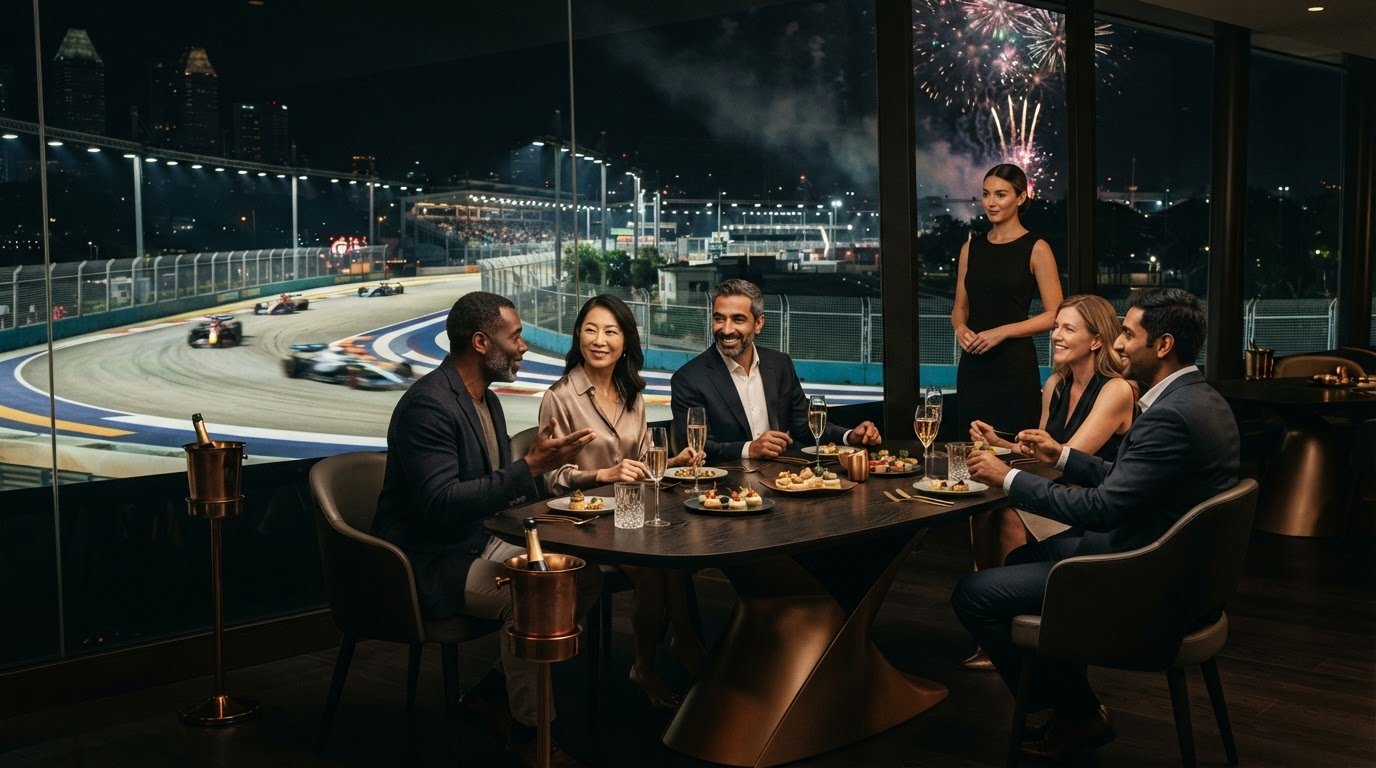
The race should set the atmosphere, not define the purpose. The most considered b2b grand prix hospitality starts with the people you are hosting: their expectations, seniority and relationship with your business, not the spectacle alone.
That distinction matters when executive guests and valued partners have different preferences, and a packed race-weekend programme leaves little room for improvised decisions. A successful gathering balances access, dining and conversation around a clear objective. Before choosing a format, decide what guests should experience and what the host team needs to do to make that happen.
This 2026 checklist covers how to align the setting with your business objectives, welcome senior clients and partners with discretion, accommodate guest needs and coordinate the weekend so logistics recede and relationships can develop naturally. With more than 15 years of experience in Formula 1 hospitality and brand activations, AIOKA brings together trackside settings, curated dining and client entertaining to create a considered race-weekend experience.
Key Takeaways
• Set a clear hosting objective before choosing the format. Use it to guide the guest list, setting and programme.
• For b2b grand prix hospitality, assign host responsibilities in advance, including guest welcome, introductions and discreet support.
• Match the setting to the guest mix. Choose a composed format for focused executive discussion or a broader, sociable one for client and partner engagement.
• Plan in sequence: objective, guest list, format, briefing, delivery and follow-up. Give each stage an accountable lead.
• A hospitality partner can bring the decisions together as a coherent guest journey, from trackside setting to curated dining and client entertaining.
B2B Grand Prix Hospitality Begins with a Clear Hosting Purpose
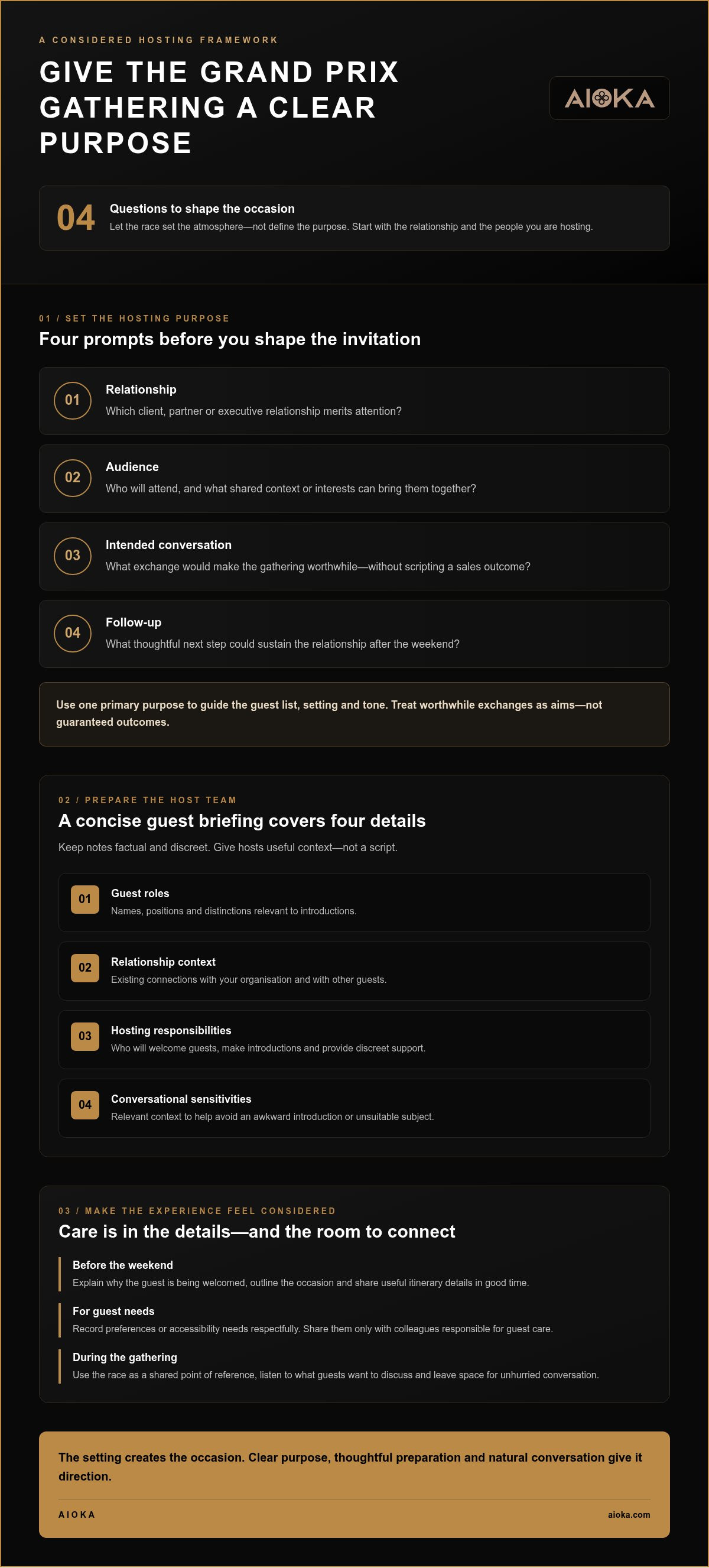
B2B Grand Prix hospitality means hosting clients, partners or executives around a race weekend, with the experience shaped by the relationships your organisation wants to nurture. The Grand Prix provides a distinctive setting, but its scale and spectacle are not the purpose of the gathering. Give the occasion direction so the racing enriches the experience without displacing conversation.
Grand Prix motor racing has evolved into a major international sporting spectacle, as outlined in this History of Grand Prix Motor Racing. For an executive host, the event itself is only one part of the design. Use these four questions to set a practical purpose:
Relationship
Which client, partner or executive relationship merits attention?
Audience
Who will attend, and what shared context or interests can bring them together?
Intended conversation
What exchange would make the gathering worthwhile, without scripting a sales outcome?
Follow-up
What thoughtful next step would sustain the relationship after the weekend?
This framework gives the host a practical test of coherence. If the guest list, setting and tone do not connect to the intended purpose, the programme may be impressive but unfocused. Hospitality can create the conditions for dialogue and a shared experience. It cannot promise a deal, deepen a relationship on its own or guarantee a commercial result.
Set the objective before shaping the invitation
Choose one primary purpose, such as strengthening an established client relationship or bringing partners together around a shared priority. Then define what a worthwhile exchange might look like: a more open discussion, a clearer understanding of each other’s priorities or the start of a useful follow-up conversation. Treat these as aims, not guaranteed outcomes. Once the purpose is clear, shape the guest list, occasion and hosting tone to suit it.
Define the guest experience in business terms
A premium setting can lend distinction to an occasion, but deliberate hosting gives that setting meaning. Thoughtful guest selection, considered dining and time for unhurried conversation can support connection without making every interaction feel transactional. The race provides a shared point of interest; the host’s attention to the guest experience helps people feel welcomed and included. For a broader view of package considerations, see the Formula 1 corporate hospitality strategic buyer guide.
Executive Guest Protocols for a Considered Grand Prix Weekend
For senior guests, protocol is less about formality than evidence of care. In b2b grand prix hospitality, the right approach reflects your organisation’s culture, each guest’s seniority and the character of the occasion. Prepare thoroughly so hosts feel confident, while leaving the experience natural rather than prescribed.
Prepare invitations and guest context with discretion
An invitation should explain why the guest is being welcomed, the format of the occasion and the practical outline of the weekend. Share useful itinerary details in good time, and describe what guests can expect without overwhelming them. If you record preferences or accessibility needs, do so respectfully through appropriate internal processes. Share those details only with colleagues responsible for guest care.
Before the event, brief each host with concise, relevant notes. A useful briefing may include:
Guest roles
Names, positions and any distinctions relevant to introductions.
Relationship context
Existing connections with your organisation and with other guests.
Hosting responsibilities
Who will welcome guests, make introductions and provide discreet support during the programme.
Conversational sensitivities
Context that helps hosts avoid an awkward introduction or unsuitable subject.
Keep the notes factual and discreet. They should help a host remember context, not turn an introduction into a recital. Assigning clear responsibilities also prevents guests from being left unsure about whom to approach for assistance. Practical event preparation, from establishing objectives to considering attendee experience, is explored in Event Management Best Practices for Corporate Hospitality.
Guide conversation without turning it into a pitch
The race offers an immediate shared reference, whether guests follow the sport closely or are experiencing the atmosphere for the first time. Use that common setting to open conversation, then listen for the subjects guests genuinely want to discuss. Business conversation may have a place, but it need not dominate every exchange. An unhurried meal or a pause between programme moments can make room for informal connection.
Resist over-programming. A succession of introductions, presentations and scheduled conversations can make hospitality feel like an obligation rather than an invitation. Keep the programme focused on the purpose you set, while leaving guests time to engage naturally. AIOKA’s corporate hospitality planning brings guest care, dining and event context together in an experience shaped around the occasion.
Match the Grand Prix Setting and Guest Mix to the Occasion
The right setting supports the relationship you want guests to experience. It is not necessarily the one with the most dramatic view. For b2b grand prix hospitality, weigh the audience, purpose, atmosphere and hosting format together. Viewing, hospitality space and dining each contribute to the weekend, but their value depends on how well they fit the people attending and the way you want them to engage.
| Audience | Purpose | Desired atmosphere | Hosting format |
|---|---|---|---|
| Senior executives | Enable focused, considered conversation | Composed, with space to speak and listen | A more intimate hospitality setting, with viewing and dining arranged around discussion |
| A wider group of clients or partners | Encourage introductions and shared engagement | Welcoming and sociable, without feeling crowded | A broader gathering with natural moments for guests to connect |
| Returning clients | Recognise and develop an established relationship | Personal and attentive, rather than formulaic | A tailored experience that reflects the history of the relationship |
Choose a format that serves the guest relationship
Senior guests may value a setting where conversation can unfold without competing demands on their attention. A broader partner gathering needs enough shared structure to bring people together, while leaving room for introductions and informal exchange. For returning clients, consider what would feel thoughtful in light of the existing relationship rather than repeating an identical itinerary. No format is inherently superior; alignment makes it appropriate.
Consider the rhythm of the occasion as carefully as the setting. A strong view can create a memorable shared focus, while a hospitality space gives guests a place to gather. Curated dining offers time together away from the racing. The balance depends on whether the priority is sustained discussion, sociable connection or a measured combination of both.
Design the guest mix with intention
Guest composition shapes the atmosphere. Bring people together when shared interests or complementary professional roles can give conversation a natural starting point, but avoid arranging every interaction as though it must produce a business result. Make considered introductions, then let guests decide how they wish to engage.
A programme crowded with presentations, introductions and competing activities can leave little room for genuine exchange. Keep the structure light enough for guests to enjoy the event on their own terms, while ensuring the host is available to connect people and guide the experience. A carefully chosen setting supports the gathering; attentive hosting makes it feel considered.
A Practical Checklist for Planning B2B Grand Prix Hospitality
A dependable plan gives each stage a clear owner, from defining the purpose to maintaining the relationship after the race weekend. For b2b grand prix hospitality, this sequence helps protect the guest experience while keeping practical decisions and responsibilities visible to the team.
Before the event: align people, purpose and programme
Start with the intended audience and hosting objective, then shape a programme that reflects both. Assign an event lead to oversee coordination and a senior host to guide the guest-facing experience. Use a concise shared plan to bring the essential decisions together:
Objective
The business host defines the primary purpose and the kind of engagement that would make the occasion worthwhile.
Guests
The host confirms the guest list, records relevant preferences through appropriate internal processes and oversees invitations with clear details about the occasion and itinerary.
Format
The event lead aligns the setting, viewing, hospitality space and dining with the audience and desired tone.
Briefing
The event lead prepares host assignments, guest context, introductions and a concise programme for the team.
Coordinate timing, access information and guest support through the event planning team so communications are consistent and hosts know where to direct questions. Include contingency planning: decide who will communicate changes, who will support guests if plans shift and how the host team will stay aligned. Keep the plan practical and specific to the event.
During and after the event: host attentively and follow through
On the day, the senior host should welcome guests personally, make introductions with relevant context and stay alert to the group’s changing needs. The event lead can monitor the programme and coordinate support, leaving the host free to be present. Keep intervals open where possible. Natural conversation needs room, and not every moment benefits from an activity or formal prompt.
Afterward, the relationship owner should send individual correspondence that reflects the conversation, rather than a generic note to every attendee. Record agreed next steps, responsible colleagues and appropriate timing. Then review the quality of engagement: whether useful conversations took place, connections were made and follow-up is clear. This gives the team a meaningful account of the experience without claiming a guaranteed return or reducing relationship-building to a single commercial measure.
For a race-weekend plan shaped around your objectives and guest experience, explore AIOKA’s corporate hospitality planning.
From Hosting Checklist to a Bespoke AIOKA Experience
A checklist establishes the decisions; a considered guest journey connects them. For b2b grand prix hospitality, translate your organisation’s purpose and guest profile into a coherent experience, from the first invitation through trackside hospitality, dining and client entertaining. The result should feel composed for its audience, rather than assembled from separate event elements.
Bring hospitality, guest care and business intent together
AIOKA curates corporate hospitality at Formula 1 race weekends worldwide, drawing on more than 15 years of experience in Formula 1 hospitality and brand activations. Bespoke planning connects the host’s objectives to practical choices, including the format, the character of the setting, curated culinary experiences and how guests are welcomed and supported.
For a gathering centred on executive discussion, shape the experience around a composed rhythm and room for conversation. A broader client or partner occasion may call for a format that encourages introductions and shared engagement. In either case, trackside settings and dining form part of the overall hosting design, not simply markers of prestige. The aim is to support the intended atmosphere and give guests a polished, considered experience.
Race weekends involve many connected details. Coordinating those elements helps the host remain attentive to guests while the programme unfolds with composure. Hospitality creates an environment for meaningful engagement, while the quality of each relationship remains grounded in the people and conversations themselves.
Move from internal checklist to a considered brief
Start a useful brief with three foundations: the audience you intend to welcome, the purpose of the gathering and the race-weekend context that best suits the occasion. From there, AIOKA can shape the experience around your organisation’s priorities and guests, bringing hospitality, guest care and programme details together in a deliberate whole.
To develop your plans, explore AIOKA corporate hospitality and begin shaping a Grand Prix experience around your guests and objectives.
Make Your Next Grand Prix Gathering More Considered
The strongest b2b grand prix hospitality starts with a clear hosting purpose, then aligns guest protocol, setting and programme. A carefully chosen format reflects the people attending, while thoughtful preparation and attentive follow-up help conversations continue beyond the race weekend.
AIOKA draws on more than 15 years of Formula 1 hospitality and brand activation experience to curate corporate hospitality across race weekends worldwide. Trackside settings, curated culinary experiences and client entertaining can be shaped around your organisation’s objectives and your guests’ expectations, with the details coordinated to keep the experience composed.
Whether you are strengthening established client relationships or bringing partners together, begin with the audience and the purpose you want the occasion to serve. Explore AIOKA corporate hospitality and take the next step towards a considered Grand Prix experience for your guests.
Frequently Asked Questions
What is B2B Grand Prix hospitality?
B2B Grand Prix hospitality is corporate hosting for clients, partners or executives around a Formula 1 race weekend. It creates a considered setting for business relationships, combining the event with hospitality and opportunities for conversation. The race supplies a shared experience, while the host shapes the guest journey around the occasion. AIOKA provides corporate hospitality experiences at Formula 1 race weekends worldwide.
How do you plan corporate hospitality at a Grand Prix?
Define the business purpose before choosing the guest list, format or programme. Decide which relationships the gathering should support, what kind of exchange would be valuable and what atmosphere suits the guests. Then coordinate invitations, practical information, host responsibilities, dining and guest support. Assign an event lead to oversee details, and leave space for natural conversation rather than scheduling every moment.
What should a corporate host include in a Grand Prix hospitality checklist?
A useful checklist covers the full sequence: objective, guests, format, briefing, delivery and follow-up. Record the purpose and intended audience, assign a responsible host or event lead, and align the setting and programme with guest expectations. Prepare invitations and concise host notes, coordinate practical details and support, and decide who will communicate changes. After the weekend, send individual follow-up and record agreed next steps.
How can Grand Prix hospitality support client relationships?
Grand Prix hospitality can support client relationships by bringing people together in a distinctive shared setting where conversation can develop beyond a formal meeting. A thoughtful guest mix, attentive hosting and time for informal exchange help make the occasion feel personal rather than transactional. Hospitality can create conditions for dialogue and mutual understanding, but it cannot guarantee a sale or a particular commercial outcome.
How should a host choose the right Grand Prix hospitality format?
Choose a format according to the guests, the purpose and the atmosphere you want to create. A senior executive gathering may benefit from a composed setting that allows focused conversation, while a wider partner event may call for a sociable format that supports introductions. Consider how viewing, hospitality space and dining work together, and tailor the programme to the relationship rather than repeating a standard itinerary.
What should hosts do after a corporate Grand Prix event?
After the event, the relationship owner should follow up individually, referring to a conversation or shared moment where appropriate. Make the message relevant to each guest, confirm agreed next steps and identify who will take responsibility for them. Internally, review whether the intended conversations and connections took place. This helps the organisation continue relationships thoughtfully without treating attendance alone as proof of commercial success.
How can an executive host maintain discretion during Grand Prix hospitality?
An executive host can maintain discretion by sharing guest information only with colleagues who need it to support the experience and keeping briefing notes factual and concise. Discuss preferences or sensitive context privately, and avoid drawing unnecessary attention to individual needs or business matters. During the event, make introductions with care, listen attentively and let guests choose how much they wish to discuss.
Watch the story unfold from the paddock
Since 2012, AIOKA has hosted guests for brands like Microsoft, Marriott and Red Bull at Formula 1 race weekends. Let us plan yours.
Enquire about F1 hospitality