B2B Client Entertainment at a Grand Prix: Five Experience Formats
B2B Client Entertainment at a Grand Prix: Five Experience Formats
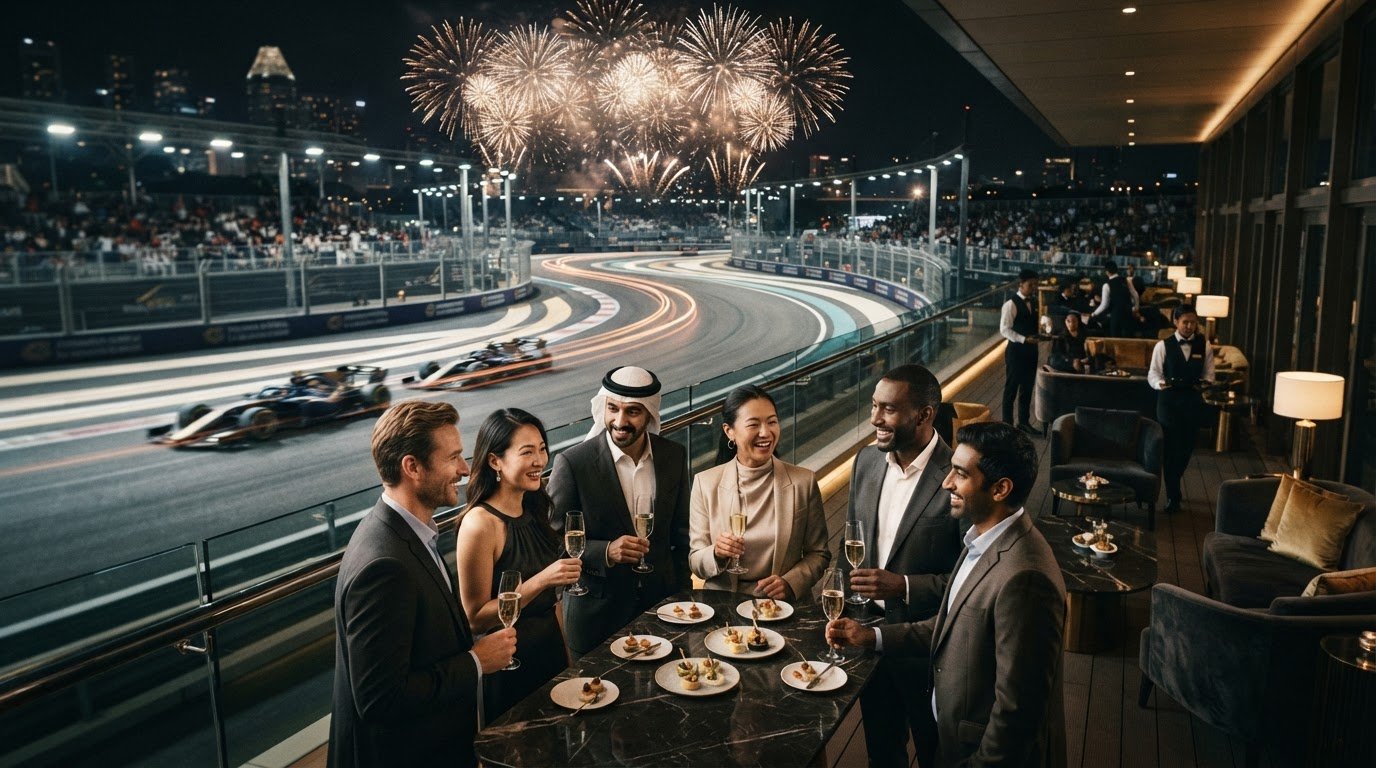
A Grand Prix invitation is memorable by nature, but a valuable business occasion takes more than a premium view. A considered b2b client entertainment grand prix programme starts with a clear purpose and gives guests room to connect, talk and agree on a useful next step.
The format should fit the relationship. Long-standing clients may value relaxed time together, while senior prospects may benefit from a more private setting or a thoughtful introduction to your brand. Choose by balancing access, atmosphere and the opportunity for genuine conversation, rather than assuming that greater exclusivity will deliver greater commercial value.
This guide explores five ways to host clients around a Grand Prix and how each can serve a distinct relationship goal. From corporate hospitality and trackside experiences to culinary curation and brand activation, you’ll find practical ways to match the occasion to your audience, plan meaningful conversations and follow up thoughtfully. AIOKA brings more than 15 years of experience in premium Formula 1 hospitality to these race-weekend programmes.
Key Takeaways
• Effective b2b client entertainment grand prix programmes begin with a relationship objective, not simply a premium setting.
• Five useful formats include trackside hospitality, curated dining, executive networking, brand activation and multi-day hosting.
• Match the experience to the intended outcome, whether appreciating established clients, facilitating introductions or deepening brand engagement.
• Shape the guest journey with thoughtful invitations, considered pacing, prepared hosts and personal follow-up.
• AIOKA brings premium hospitality, culinary curation and brand activation together, informed by more than 15 years in Formula 1 hospitality.
B2B Client Entertainment at a Grand Prix: Why the Format Matters
B2B client entertainment is intentional hosting: an invitation designed to create space for trust, attentive conversation and a more personal understanding of the people around the table. At a Grand Prix, the race provides a shared focus, while hospitality and access create a setting for business relationships to develop beyond a formal meeting. A b2b client entertainment grand prix programme works best when these elements serve a specific purpose.
The appeal comes from the combination of sport, setting and story. Guests share the anticipation of the race, enjoy a hosted environment and, where appropriate, encounter the values or work of the inviting brand. Hospitality might centre on a carefully planned meal or an elevated trackside setting. The Formula One Paddock Club is one recognised example of premium Grand Prix hospitality. But spectacle alone does not make an occasion relevant. The format, guest list and hosting approach should all support the relationship objective.
From impressive occasion to purposeful client engagement
An invitation gives clients access to an event; thoughtful hospitality gives that access shape. A considered welcome, a programme with time to breathe and introductions that help guests connect can make it easier for conversation to move naturally from the shared experience to business. Follow-up can then carry the discussion forward. Commercial impact is an objective to plan for, not an outcome hospitality can promise.
The audiences and objectives behind a Grand Prix invitation
Invite existing clients to recognise their partnership or strengthen an established relationship. Prospective partners may benefit from an environment that supports introductions, while senior decision-makers and other stakeholders may need a focused programme with time for meaningful exchange. Brand immersion is useful when the experience can express the host’s identity in a relevant way.
Purposeful B2B client entertainment at a Grand Prix brings the right guests together in a setting designed to advance a specific relationship objective. That objective might be appreciation, introductions, relationship development or brand engagement. Naming it early helps determine the occasion’s tone, pace and level of structure.
The five formats in this article translate that intention into different experiences: trackside hospitality, curated dining, executive networking, brand activation and multi-day hosting. A format can stand alone or combine with others, as long as every element has a clear role and the guest journey feels coherent.
Five Grand Prix Experience Formats for B2B Client Entertainment
The format shapes how guests experience the race, one another and the host brand. For b2b client entertainment grand prix planning, these five approaches can anchor an occasion or combine into a programme built around the guest journey.
Hospitality-led formats for conversation and shared viewing
Trackside hospitality
A hosted setting with a close view of the race gives clients a shared focal point and a natural rhythm for conversation. It suits client appreciation and established partnerships, where the occasion itself is part of the gesture.
Curated dining
A considered meal creates a more intimate setting with fewer distractions and room for sustained discussion. It can complement race viewing or provide a quieter moment for guests who value personal conversation.
Executive networking
A gathering planned around relevant introductions helps senior guests meet peers, clients or prospective partners. A well-chosen guest mix and a host who makes thoughtful introductions are central to its value.
Brand-led and multi-day formats for a broader guest journey
Brand activation
An experiential expression of the company’s identity invites guests to engage with the brand rather than simply observe it. AIOKA’s brand activation services can shape this presence as part of a race-weekend experience, with the concept aligned to the audience and message.
Multi-day hosting
A programme across different moments of a race weekend can create continuity, from an initial welcome to shared viewing and a closing gathering. This format suits important relationships that benefit from more than one opportunity to connect.
Hospitality-led formats centre on shared time and conversation; brand-led activations make the company’s story an experience guests can encounter directly. This distinction clarifies the emphasis. A well-planned programme can bring both together without making the event feel over-scripted.
For example, trackside hospitality might provide the main gathering, curated dining a more intimate interval, and a subtle activation a tangible point of connection to the host brand. Keep the sequence coherent rather than crowded, and give each element a clear purpose. AIOKA brings premium Formula 1 hospitality, culinary curation and brand activations together for corporate hosts. Explore its Grand Prix hosting experiences as you consider the right mix for your guests.
Choosing a Grand Prix Hosting Format Around Your B2B Objective
The most elaborate setting isn’t automatically the most effective. A suitable format gives guests a natural reason to be together and supports the conversation the host wants to encourage. In b2b client entertainment grand prix planning, start with the relationship objective, then consider guest seniority, how well attendees know one another, group size and preferred pace.
| Format | Suitable objective | Guest dynamic | Planning emphasis |
|---|---|---|---|
| Trackside hospitality | Appreciating established clients | Shared race viewing with space for informal conversation | Choose a setting and programme that allow guests to connect as well as follow the race |
| Curated dining | Developing a relationship through more personal dialogue | A more intimate gathering, suited to attentive conversation | Set a comfortable pace and consider seating and introductions |
| Executive networking | Facilitating introductions among relevant guests | A group whose connections may be new or developing | Curate the guest mix and prepare hosts to make purposeful introductions |
| Brand activation | Encouraging brand immersion | Guests engage with the company’s story or proposition | Make the experience relevant, clear and suited to the audience |
| Multi-day hosting | Building continuity across a race weekend | Guests connect through a sequence of shared moments | Give each moment a distinct role and maintain a coherent rhythm |
Matching experience formats to the relationship objective
For relationship appreciation, hospitality-led settings bring clients together around shared viewing and conversation. When introductions are the priority, a networking-led moment needs a considered guest mix and active, tactful facilitation. If guests should encounter a company’s story or proposition directly, a brand activation can make that message experiential. Choose according to the interaction you want to encourage, not a ranking of prestige.
Adapting the programme to the invited audience
Consider whether guests already know one another, how much structure will help them connect and how much time they can give the occasion. Senior executives may value a focused programme that respects their schedules; a broader group may benefit from planned introductions and a clear host presence. Include accessibility needs and the desired pace in your planning.
Group size and seniority are useful considerations, but neither is an objective in itself. A smaller gathering may suit a discreet client conversation, while a larger one can support introductions across a relevant group. The strongest format makes the intended exchange feel natural, with enough structure to guide the occasion and enough room for relationships to develop. For businesses seeking interactive sporting experiences for corporate entertainment closer to home, Inbound Golf provides a mobile setup tailored to facilitate relaxed client networking.
Planning Grand Prix Client Entertainment from Invitation to Follow-Up
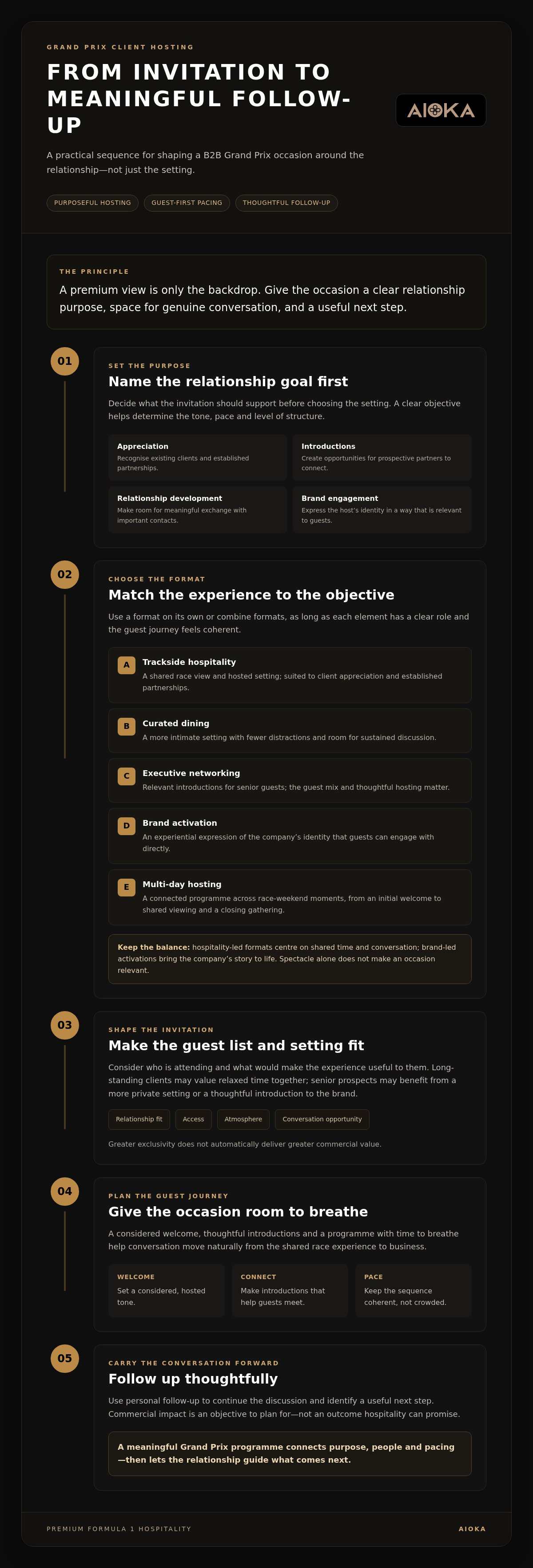
A considered guest experience begins before race weekend and continues after the final conversation. For b2b client entertainment grand prix planning, a clear sequence helps align the invitation, hosting and follow-up with the relationship the event is meant to support.
Preparing a considered guest journey
Set the purpose.
Define the intended outcome, such as recognising an established client, facilitating introductions or exploring a developing relationship. Use it to guide the guest list and format.
Select and invite guests thoughtfully.
Be clear about why each person is invited and how they contribute to the gathering. Make the invitation personal and informative: explain the occasion, its context and what participation will involve, without turning it into a sales pitch.
Shape the programme.
Plan the welcome, transitions and moments for conversation, leaving room for the race and natural interaction. A run of show can keep the experience flowing without scripting every exchange.
Prepare the hosts.
Agree who will welcome guests, make introductions and guide the occasion. Brief hosts on relevant account context and conversation themes so they can connect people discreetly and respond to guests’ interests.
Practical planning should also account for guests’ schedules and accessibility needs. A comfortable pace, clear meeting points and well-briefed hosts help the event feel composed rather than like a sequence of obligations.
Extending the value beyond the race weekend
After the event, record useful observations and agreed actions with appropriate care. Note relevant topics, introductions made and next steps the guest welcomed. Follow up individually, referring to the actual conversation rather than sending every attendee the same generic message.
A concise measurement framework keeps the review focused: compare attendance with invitations, assess engagement through participation and meaningful conversations, gather guest feedback, and record completed or agreed follow-up actions. These indicators help show whether the experience served its objective, but they are not automatic evidence of commercial return. Interpret them in context. A separate guide to measuring corporate hospitality ROI can provide a deeper evaluation framework.
For a programme shaped around your guests and relationship objectives, explore AIOKA’s Grand Prix hospitality planning.
How AIOKA Shapes Grand Prix Experiences for Corporate Hosts
AIOKA brings premium Formula 1 hospitality, curated culinary experiences and brand activation together in programmes for corporate hosts. Planning starts with the guests and the purpose of bringing them together, then shapes the race-weekend experience around how the host wants to welcome, engage and connect with them.
A coordinated approach to hospitality and brand presence
A considered trackside location creates a distinctive setting for client hosting, with the race as a shared focus and natural backdrop for conversation. Hospitality gives guests space to gather and connect; a brand activation adds an experiential expression of the host’s identity. Together, these elements can keep the brand present without letting it overshadow the occasion.
Culinary curation helps shape the character and rhythm of the guest journey, from the welcome through to moments of conversation. The focus is on how food and hospitality support the experience as a whole. A dedicated guide to culinary hospitality can explore this element further.
From business objective to a bespoke race-weekend experience
The programme takes shape around three considerations: who is invited, what relationship the occasion should support and which format will make the intended interaction feel natural. A gathering for established clients may centre on shared hospitality, while a programme intended to encourage brand immersion can give activation a more prominent role. Each element should contribute to the guest experience and have a clear reason to be there.
AIOKA has more than 15 years of experience in premium Formula 1 hospitality and supports experiences across race weekends worldwide. That background informs tailored corporate programmes, from trackside settings and culinary experiences to brand activations. Thoughtful planning and discreet delivery help the practical details recede, leaving guests free to enjoy the occasion and engage with one another.
For a b2b client entertainment grand prix programme, the value lies in the fit between the occasion and its purpose. AIOKA’s corporate hospitality services bring the elements together around your guests and business objectives.
Shape a Grand Prix Experience with Purpose
The most considered b2b client entertainment grand prix programme starts with a relationship objective, then selects a format and guest journey to serve it. Trackside hospitality, curated dining, executive networking, brand activation and multi-day hosting each offer a distinct way to bring clients together. Thoughtful invitations and personal follow-up help extend the value beyond race weekend.
With more than 15 years of Formula 1 hospitality experience and programmes supporting race weekends worldwide, AIOKA brings corporate hospitality, curated culinary experiences and brand activation together for corporate hosts. Each element can contribute to how guests connect and experience the host’s brand.
Explore AIOKA corporate hospitality and discuss a bespoke Grand Prix programme shaped around your business objectives.
Frequently Asked Questions
What is B2B client entertainment at a Grand Prix?
B2B client entertainment at a Grand Prix is intentional hosting that uses the race-weekend setting to create space for business guests to connect. A b2b client entertainment grand prix programme may combine shared race viewing, premium hospitality, curated dining or brand experiences, with each element chosen to support a relationship objective. It differs from simply inviting someone to attend because the guest experience, hosting and follow-up are planned with purpose.
What are the best Grand Prix experiences for entertaining business clients?
The best format depends on your guests and the relationship you want to support. Trackside hospitality suits shared viewing and client appreciation; curated dining offers a more intimate setting for conversation; executive networking supports relevant introductions; brand activation invites guests to experience a company’s story; and multi-day hosting creates continuity across the race weekend. These formats can stand alone or combine, provided each has a clear role in the guest journey.
How can a Grand Prix event support B2B relationships?
A Grand Prix gives guests a shared experience beyond the usual meeting environment, which can make conversation feel more natural and personal. Thoughtful hosting, well-considered introductions and time to talk can help build familiarity and strengthen an existing connection. The event can also create a setting to explore a developing partnership or introduce a company’s work. Hospitality can support relationship-building, but commercial outcomes depend on the wider relationship and follow-up.
How do you choose a client-entertainment format for a Grand Prix?
Begin with the relationship objective, then consider guest seniority, group size, how well attendees know one another and the kind of conversation you hope to encourage. Hospitality can centre on appreciation and shared viewing, networking on introductions, and brand activation on immersion in a company’s story. Also account for schedules, accessibility needs and the desired pace. The most elaborate format is not necessarily the most suitable for your audience.
Can a Grand Prix client-entertainment programme include a brand activation?
Yes. A brand activation can give guests an experiential way to encounter a company’s identity, work or proposition as part of a Grand Prix programme. It can complement corporate hospitality rather than compete with it: hospitality creates the setting for hosting, while activation gives the brand a more direct role in the guest journey. AIOKA provides brand activation services alongside premium Formula 1 hospitality, shaped around the host’s objectives and audience.
How should a company measure the value of Grand Prix client entertainment?
Assess the occasion against its original purpose rather than relying on attendance alone. Review invited and attending guests, the quality of participation and conversations, feedback, and agreed follow-up actions. Record relevant introductions and next steps, then consider whether they progressed. These measures help clarify engagement and inform future planning; they do not prove commercial return by themselves. Interpret them alongside the broader relationship context and the time business outcomes may take to develop.
What should a host include in a Grand Prix client invitation?
Make the invitation personal and give guests the information they need to understand the occasion. State why you’re inviting them, the race and event date, the location or meeting point, the planned format and any key timing or RSVP details. Set an appropriate expectation without overloading the message. A clear, thoughtful invitation helps guests prepare, shows that their participation is valued and sets the tone for the gathering.
Watch the story unfold from the paddock
Since 2012, AIOKA has hosted guests for brands like Microsoft, Marriott and Red Bull at Formula 1 race weekends. Let us plan yours.
Enquire about F1 hospitality